The Walter Taylor Bridge In Indooroopilly

So, I’ve got some thing new coming to my blog this Monday. Make sure you call in and check it out!

Daily Photo – The Walter Taylor Bridge in Indooroopilly

This is the Walter Taylor Bridge in Indooroopilly, one of Brisbane’s quirkiest landmarks. Opened in 1936, it’s not just a suspension bridge but once had people living inside its towers. For decades, the tollkeeper’s family called the northern pylon home, with laundry lines stretching over the traffic below.

Built by Walter Taylor using surplus Sydney Harbour Bridge cables, it was the longest span of its kind in Australia at the time. There was once even a ballroom in one tower. Practical, unusual, and full of character, it’s a true slice of Brisbane history.

Feeding Pigeons In St Stephen’s Green

Daily Photo – Feeding pigeons in St Stephen’s Green

Amongst the jigsaw puzzle streets of Dublin that twist and turn across the city, you’ll find St Stephen’s Green. Within St Stephen’s Green, I found a man called Daniel. The few items that he was carrying with him were carefully placed on a park bench while he chatted to anyone who would stop by to talk. He was polite and friendly and spoke in a gravelly tone that told of a less than comfortable life on the streets of Dublin. He spoke of having many favourite spots in the city centre but this spot was by far his favourite. Manly because of how peaceful it is and the calmness of the place. Then just as he spoke they arrived, pigeons. Lots and lots of pigeons.

It turns out that Daniel works for one of the homeless shelters in Dublin. Collecting money and donations, along with doing other ‘odds and ends’ that need to be done. But, what he really likes to do is feed the pigeons. As he threw seed out for them and gently poured it into the hands of strangers who stopped, the pigeons were quick to find the food source. In an instant, three to five pigeons were on heads, shoulders and arms, gently pecking. Suddenly, as quickly as they had arrived they were off into the sky. They swooped in a massive loop before landing in exactly the same spot and continuing their hunt for food.

Bobbing along in Aberdeen Harbour

The other day I mentioned Lightroom Presets and how useful they are. Well, today’s photo from Hong Kong was edited with a preset (I use them all the time) called ‘Don’t Jab With A Jabber’.


Daily Photo – Bobbing along in Aberdeen Harbour

I found myself bobbing along in one of Hong Kong’s famous sampan boats, weaving through the bustling waters of Aberdeen Harbour. Sampans are the traditional wooden boats that were once the backbone of Hong Kong’s fishing community, small, sturdy, and surprisingly nimble. These days, most of them are used to ferry curious visitors like mself around the harbour, giving us a glimpse of a slower, older way of life that’s still clinging on amid the glass and steel towers of the modern city.

I could tell you that the word ‘sampan’ comes from the Cantonese for ‘three planks,’ referring to the original flat-bottomed design. But honestly, I was less concerned with the etymology and more distracted by the colourful chaos of the waterfront with junk boats, houseboats, rusting barges, and the occasional super yacht all jostling for space like a very polite traffic jam.

The boat itself was decked out with lanterns and trinkets that swayed gently as we chugged along. There’s something oddly calming about the soft putter of the engine and the slow rhythm of the water slapping against the hull. I sat there, gazing out at the tower blocks and fishing boats, thinking that in a city known for its pace, this little pocket of calm felt like a small, stubborn act of resistance.

Walking The Victoria Bridge In Brisbane

I listen to all sorts of music while I take and edit photos, it kinda depends on my mood. If you wanna hear what’s currently near the top of my rotation, follow This Link to Spotify.


Daily Photo – Walking the Victoria Bridge in Brisbane

This is Victoria Bridge, one of Brisbane’s busiest crossings, lit up in vivid purples and blues for the night. It spans the Brisbane River, linking the South Bank cultural precinct to the CBD. The current version of the bridge (because there have been several over the years) was opened in 1969, which makes it over 50 years old now. A respectable age for a bridge.

To be honest, I had to double check the name. For some reason, I always confuse it with the Goodwill Bridge further downstream, which is a pedestrian-only crossing. The Victoria Bridge however, is the one where the buses thunder across in both directions and if you’re walking, you can sometimes feel the vibrations of the traffic humming through the concrete.

On this occasion, it wasn’t the traffic or the practical usefulness of it all that I was interested in, but the way the lights bounced off the water below, giving the river that surreal, glassy finish. If you’re a fan of city reflections (which I’ve discovered I am), it’s one of those spots that makes you stop for a second.

I could tell you more about the history of the bridge (it’s burned down, collapsed, and been rebuilt more than once), but instead I’ll just point out that right underneath this very spot is where the old horse-drawn trams used to cross, back when Brisbane was a much sleepier place.

Waiting For Buses Near Trinity College

So, I’ve decided to make a few changes to the layout of this here blog. If things seem to have changed dramatically next time you visit, it’s all part of a master plan. Hopefully (with fingers crossed🤞), the photos with appear larger on most devices with a change in size to the titles as well. I hope you enjoy.

Don’t forget you can click on the catergory names above each post to see more photos related to that place. For example, you can give it ago here it Dublin 🇮🇪.


Daily Photo – Waiting for buses near Trinity College

I stumbled across this photo while looking for something completely different. I took it one evening when I was heading across Dublin to Tara Street Station. From memory, I’d come from O’Connell Street via one of the bridges that cross the River Liffey when, in heavy traffic, I came across the Thomas Moore statue just as the evening sky was turning a lovely bluish-purple.

Queenstown to Glenorchy

Daily Photo – Queenstown to Glenorchy

The road to Glenorchy followed the eastern edge of Lake Wakatipu for 46 kilometers (28 miles). Two or three times I stopped in laybys and lookouts and went to the edge to stand hopefully in the murky gloom, knowing there was a lake out there, sure that I’d get blown into it at any moment. The wind and rain was everywhere – and coming from every possible direction. It seemed impossible to find a location that was both sheltered and safely away from the road side as campervans, tour buses and recreational vehicles hurriedly came to and from various places on the lake, looking decidedly unimpressed with the weather. Some time previously, I had bought an overpriced cup of coffee from one of those roadside caravans, so I sat in my car sipping coffee waiting for a break in the weather. The nearby mountains echoed in the moody atmosphere while storm clouds continued to roll in. I’d really been looking forward to the drive from Queenstown to Glenorchy. I sat in my car listening to the wind continuing to whip up the lake, only adding to the sense of drama. For the life of me, I couldn’t decide if I was happy I was driving into it or not!

The Road Home

Daily Photo – The Road Home

There’s something quietly revealing about standing alone on a long, empty gravel road, rain clouds drifting overhead and snow dusting the distant ranges. It’s the kind of place that either makes you want to turn back quickly or stay a while. When a cool wind lifted my hat and sent it tumbling, I took it as a sign. I sat by a nearby boundary fence and paused for a bit. Besides, I had a flat tyre to deal with, and the boot wasn’t going to unpack itself.

The Kai Kart

Daily Photo – The Kai Kart

Not far from the ferry terminal in Oban, you’ll find the Kai Kart, quietly serving some of the best fish and chips in the country. There’s nothing fancy, just a caravan cooking great food as the sizzle of fresh blue cod, and the smell of salt fill the air. In fact, according to some reviewers it’s arguably the best fish & chips in the country. Plan for a bit of a line, bring some patience, and a taste for Oban hospitality. Good food, simply done.

St Stephens Green in Dublin

Daily Photo – St Stephens Green in Dublin

This is St Stephens Green, a few days after Christmas on a chilly Dublin afternoon. It almost seems impossible to believe it wasn’t always the manicured Victorian park it is today.  In the 17th century, the area was used as land for grazing livestock. It then became a popular dueling spot during the 18th century as men would settle disputes with pistols at dawn in the park. Around this time, public executions including hangings were held in the area while in more recent times the park featured a statue of King George II that had stood since 1758. That was, until it was blown up the day after the coronation of George VI by Irish Republicans in 1937 

Swanston Street in Melbourne

Daily Photo – Ambling on Swanston Street in Melbourne

I like Melborune, partly because it is very walkable and easy to navigate thanks to all the bridges across the river, but mostly because of the trams. So, when I found myself with a day free of any planned activities, I spent the first part of the day riding trams to random locations I’d never been to before. Following that, I spent the rest of a very pleasant Melbourne day wandering its busy streets and narrow alleyways, admiring the Yarra River, its modern skyscrapers, historic architecture and bustling laneways.

It was while ambling along Swanston Street that I came across this lady who does the most colourful designs with vinyl records. I watched and chatted to her for about 10 minutes as she created new designs that would evolve right before your eyes.

Falls Curfew 1970

Here’s another photo from my phone, I’d forgotten all about it. I took this in Belfast while on a Black Taxi Tour through some of the city’s historic peace lines and murals. It was both a surreal and profound expereince.

Daily Photo – The Battle of the Falls

When I was growing up, I couldn’t tell you what all the troubles in Northern Island were about, all I knew was that there were two groups of people who were very angry with each other. This much I was certain about, mainly due to the fact that every so often a news item would appear on television which featured things being blown-up, people getting shot at and lots and lots of fighting. What started all this? Well, I just couldn’t say, but boy did they seem to dislike each other. 

So, a number of years later (quite a few actually), when I found myself in Belfast, I took the opportunity to do a Black Taxi Tour. I’d been reliably informed that it was a fascinating way to see many of the historic sites in Belfast that featured in the violent clashes between the British Army and the Provisional IRA. To which, I have to say, it was one of the most eye opening tours I’ve ever done. If you’re ever in Belfast, I’d advise doing a Black Taxi Tour, it really is a fascinating few hours. 

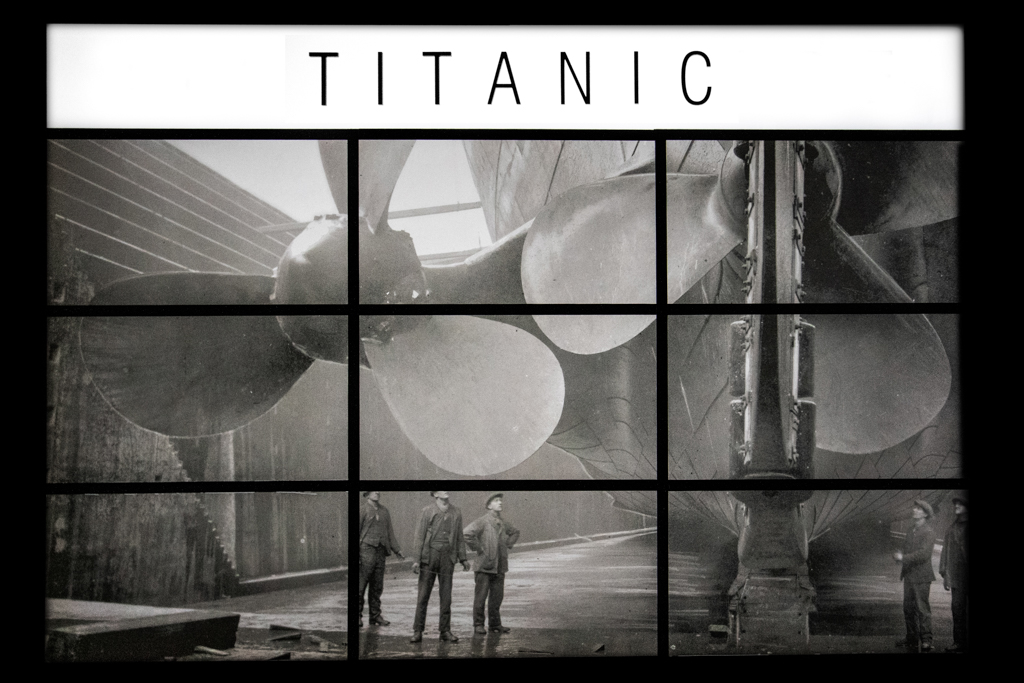
It was on this tour that we passed through the Falls district where the Falls Curfew took place. Until that time, I didn’t know what the The Falls Curfew or The Battle of the Falls was. Thus I discovered on a rainy day in Belfast that the Battle of the Falls was a violent clash in July 1970 in Belfast, Northern Ireland, between the British Army and the Provisional IRA in the nationalist Falls Road area. Triggered by an arms search, the army imposed a curfew and launched a large-scale operation, sparking intense gun battles. Four civilians were killed, and hundreds were injured. The incident deepened mistrust between the Catholic community and the British Army, escalating tensions during the early troubles.

Upper Hutt To Wellington By Train

Daily Photo – Wellington Train Station

The mid-morning train from Upper Hutt to Wellington had been unusually full for a Thursday. Inside, it felt like a moving collection of private lives, commuters heading into the city, caught in their own little worlds. Some read engrossed, others stared blankly out the window, as if in a trance, the passing hills and suburban streets passing in a blur. Some wore headphones, their expressions blank, detached from the soft clatter of the carriage.

Others appeared restless, they needed somewhere to go, something to do. For others, just movement, just purpose was enough. In this quiet time, nobody had to think too much-it was the in-between hour, the hush before the city’s noise.

When the train finally pulled into Wellington Station, the mood shifted. The doors opened and, like clockwork, everyone disembarked, filtering through the terminal and dissolving into the city, each carrying on with a day that had already quietly begun.

Shrine of Remembrance, Brisbane

Shrine of Remembrance, Brisbane 

After leaving the edge of the Brisbane River, I wandered up onto Ann Street, the pace of the city quickening around me. I had planned a short detour through King George Square, but as I reached it, I realised Brisbane’s Shrine of Remembrance was nearby. Drawn by curiosity, I entered ANZAC Square, where sunlight filtered through the trees and danced on the classic Greek revival columns that guard the eternal flame, flickering gently in the stillness. I lingered there, absorbing the atmosphere of the ANZAC spirit. Eventually, the heat of the day began to settle me. In search of shade and refreshment, I crossed the street and found solace in a cold beer at The Grand Central Hotel.

Driving Through The Haka Valley

The choice seemed a little confusing.Fence post in The Hakataramea Valley

I spent the hours pre and post sunrise chasing interesting spots in the Hakataramea Valley. Tucked away in the Waimate District, the Hakataramea Valley sits at the foot of Kirkliston range in the South Island of New Zealand and is a wonderful spot. The Haka is a glorious location to be in the mornings, they can be unbelievably cold and have a deafening silence that seems to echo throughout the valley as the light appears over the Campbell Hills, bringing a new day to the surrounding ranges.

10 Places to Visit in The Catlins

The Catlins River

Located in the southeastern corner of the South Island, the Catlins are a truly amazing spot. It features dramatic seascapes, dense native forests, and hidden waterfalls. It’s a place where winding roads lead to a breathtaking view or a windswept beach. Here is a non-definitive list of ten places to visit in The Catlins. 

Purakaunui Falls – one of New Zealand’s most iconic waterfalls. 

McLean Falls – yet another of New Zealand’s most iconic waterfalls.  

Cathedral Caves – experience an amazing bush walk before arriving at an incredible natural feature.

Nugget Point – an iconic location with dramatic views of the coastline.

Catlins River – follow the track that follows the delightful river. 

Tautuku Beach – walk to the end of the beach and spend the day exploring the peninsula which includes shipwrecks and an old whaling station. 

Slope Point – the southernmost point of the South Island. 

Curio Bay – visit the wonderful petrified forest.

Surf at Kaka Point or Purakaunui Bay – some of the best surfing spots with good quality surf and long swell periods.

Waipapa Point – walk to the lighthouse and see the beautiful vistas of the coastline.

Checkout other images from The Catlins, right here-right now!

The Devil’s Staircase

Lake Wakatipu at Kingston

To get to Kingston, at the southern tip of Lake Wakatipu, you have two options. However, it must be pointed out that it very much depends on where you’re coming from. If you’re coming from Southland, then you’ll pass through small towns such as Lumsden and Lowther before reaching the lakeside village of Kingston.

The other option (and possibly more interesting) is to turn off at Frankton on your way to Queenstown and pass through what is known as ‘The Devil’s Staircase’. Roughly 35 km south of Queenstown, it’s part of the drive between Queenstown and Te Anau and is considered a must-do leg of any Otago/Southland driving itinerary, both for the thrill of the drive and the spectacular views. Exactly how it got its name has become part of local folklore — in other words, no one really knows!

Given the nature of the road, one can only imagine what it must have been like to tackle the narrow, winding, and steep terrain, with sharp curves hugging cliffs above Lake Wakatipu, without the aid of a motor vehicle.

One story tells the tale of Captain Frederick Burwell and the Southland Hussars. Formed in the 1860s in response to fears of a Russian invasion, the cavalry corps were intent upon defending the Otago-Southland coast. At the time, there were many volunteer militias throughout New Zealand, so it wasn’t unusual for settlers to sign up to volunteer groups.

So, in 1885, when an April Review was held in Queenstown, up to 258 men from surrounding areas were due to gather. In Kingston, Captain Frederick Burwell needed to take his 30 men from the end of Lake Wakatipu up to the review assembly point in Queenstown. However, instead of going via boat, for some reason he decided to travel overland — a journey that took him and his men via the notorious Devil’s Staircase.

Travelling on horseback, they negotiated their way over small, narrow, and rugged tracks next to sheer vertical drops, before facing near-perpendicular rock faces in spots over 1,000 feet high. Once they reached the summit, a magnificent view of the lake came into view. Having passed the famous Staircase, the Kawarau River was crossed by punt, arriving in Queenstown late in the afternoon, where Captain Burwell and his men were warmly greeted, having successfully completed an arduous 40-mile journey.

Just why Captain Burwell opted for the deadly overland trip via the Devil’s Staircase instead of the easier ferry trip was never fully explained.

The Orokonui Ecosanctuary

The Orokonui Ecosanctuary

One morning, I found myself at Orokonui Ecosanctuary. The warmth of the sunlight spilled over tussock and flax and caught the curve of the visitor centre like it was a natural part of the landscape. The nearby ponds reflected the still morning sky as tui’s and bellbirds tuned up for their morning symphony. Somewhere out there, a takahē waddled through purposefully looking for a spot of breakfast. I hadn’t even started walking the tracks yet, and already, nature was making me grin like an idiot.

The Brown Trout Capital of the World

Gore – ‘the brown trout capital of the world’

Gore’s claim to fame is that of being the brown trout capital of the world and the location of the country’s prestigious Gold Guitar Awards for country music. I was on my way home from Invercargill and decided to stop for coffee and a walk around. The town was quite delightful in the afternoon sunshine with flower beds and hanging baskets lining the town’s main street. In fact, it was almost charming, a pleasant surprise.

Kurow, Otematata and Omarama.

The former National Bank in Kurow

I was on the way to Omarama via lakes going by the names of Aviemore and Benmore, and small towns with names like Kurow and Otematata. By the time I arrived in Kurow, I was ready for a bite to eat and wander in the sunshine. So, having purchased lunch at a local bakery and eaten it in the sun – I enjoyed a quiet stroll around the rural town by heading off in the direction of Otematata.

The Lindis Pass

The Linid Pass in Summer

The Lindis Pass is another stunning area of New Zealand, offering vastly different experiences depending on the season. In winter, it’s often blanketed in snow and ice, with caution advised when the road is open. In summer, the landscape transforms into a sunburnt, otherworldly terrain, its dry textures stretching across the hills. Set between the Lindis and Ahuriri Rivers, the pass was traditionally used by Māori as they journeyed through the land. In 1857, surveyor John Turnbull traversed the area and named it after his homeland—Lindisfarne Island in northeast England. 

When the Otago gold Rush took hold across the region in the early 1860’s, the moving hoard of miners who rambled from rush to rush eventually came upon the Lindis River in April, of 1861. An estimated 300 miners swarmed over the hillside as news of a find at the Lindis River spread. However by July most of the miners had moved on due to the remoteness of the area and the extreme climate. 

On a fine summer’s day, I stopped at the Lindis Pass lookout and decided to join the steady stream of people heading to the summit to take in the view. From the peak above the Omarama–Lindis Pass Road in Central Otago, the view across the pass is breathtaking—a reminder of the natural beauty and history that define this unique part of the country.

Otago Harbour from Harbour Cone

Otago Harbour from Harbour Cone

About halfway down the hill, I came to the road. On the way up, this is where the true ascent of Harbour Cone really starts. At this point, I realised I must have taken a wrong turn, I shouldn’t be on the road at all! I should be on the other side of Harbour Cone walking down the side of the hill, dodging sheep poo and enjoying the coastline views of the peninsula. Having said that, the view of Otago Harbour that was now in front of me was fairly amazing.

A Walk Along Lambton Quay

Wellington’s Lambton Quay

Instead of being where I needed to be, I’d taken a detour to check out Wellington’s Lambton Quay—as if I had all the time in the world. The city lights flickered in the fading daylight, and for a moment, I convinced myself this was a scenic, intentional choice rather than me just getting distracted again.

I was supposed to be at a restaurant 2.5 kilometres away—Monsoon Poon. With a name like that, how could I not be intrigued? Just off Wellington’s famous Courtney Place, it’d been a local favorite for years, known for its Southeast Asian cuisine. If the reviews were to be believed, I was in for a treat. I’d read that the food was delicious, the atmosphere was great, and the whole place had a vibe you just couldn’t help but enjoy. Either that, or the reviewers had all had one too many cocktails.

I was hungry, thirsty, and more than ready for a wander through the city—with the promise of good food and a cold beer waiting at the end. And honestly, at that point, I would’ve settled for a mediocre meal and a lukewarm beer, as long as it came quickly.

Oban on Stewart Island

Dawn over Halfmoon Bay

The great thing about small towns is that they are so intensely quiet in the early morning hours. Oban, on Stewart Island is no exception. I had risen early to photograph the sunrise and with that task ticked off my list, I went down into the town. Usually in those predawn hours I see at least one other person, foolish enough as myself to be up at such time. But, on this occasion I didn’t see a single soul. I wandered the empty streets as the first hints of daylight crept in, it was almost as if I had the town all to myself. It felt like a world apart—silent, peaceful, and entirely my own.

The Bullock Track Walkway

Bullock Track Walkway

Leaving the town of Clyde, then Roxburgh, the drive to Beaumont and later Lawrence was uneventful. Having caught-up on all my podcasts and not feeling in the mood for music, I filled the time by making a list of random places and things in the area that I might like to visit.

By the time I reached the Beaumont Bridge, my list included:

Walk the Bullock Track Walkway.
Find that random shed in the Tiviot Valley I spotted.
Walk up to the Alexandra Clock. 
Visit the Gorge Creek Memorial.
Explore Conroy’s Dam.
Walk the Old Reservoir Trail.
Walk up to Flattop Hill above Butchers Dam. 
Visit the ‘Somebodies Darling’ grave near Millers Flat.
Visit the Fairlight Train Station. 
Find the Horseshoe Bend Bridge

Now, you might think that visiting the Jimmy’s Pie Shop in Roxburgh should be on the list, however it doesn’t qualify. Firstly, it’s far too obvious and not obscure or random enough and secondly, whenever I drive past, I stop off anyway.

A Walk In Clyde

The Lord of Clyde in Clyde

The town, while small, was surprisingly quiet. I hadn’t expected there to be the large crowds that filled the town in early January when summer is at its peak; however I thought it would be busier than it was. After a leisurely amble up and down the main street, I deduced it might be an in-between period of summer when all the locals have gone back to work, while those still in holiday mode are away at more exotic locations like Queenstown, Taupo, or Rotorua. Over the years, Clyde has developed from a sleepy little town filled with construction workers who were working on the nearby dam to a popular holiday spot that swells on weekends as people escape the city rush to pack the tiny town for a few days before heading back to work on Monday. 

I stayed in the town once during one of its more ‘busy’ periods. The summer evening was long and warm. It was really rather pleasant. In the evening, it took forever to find a free table at any of the various eating establishments and even longer to order food, which was very nice, once it arrived. Therein lies the problem with many of the more popular small towns in New Zealand: they become so attractive that they simply don’t have the infrastructure to handle the large crowds they attract. 

On this occasion, the town was bathed in warm summer sun. It was quiet, meaning the streets were free to stroll around and enjoy all the lovely offerings Clyde had on display.

Lake Dunstan & The Cromwell Gorge

Jackson’s Inlet at Lake Dunstan

I left Queenstown Airport and spent the next 50 minutes driving to the town of Cromwell. I passed through the Gibbston Valley and the Kawaru Gorge and before arriving at the small, bustling town of Cromwell that was filled with people and bathed in bright sunshine on the shores of Lake Dunstan. Stopping for petrol and a bite to eat, a short time later I rejoined State Highway 8 and crossed the Cromwell bridge, now having the lake for company out of the right hand window. I rounded a bend and was greeted by a serene view of the lake. The lake looked warm, placid and tranquil as the summer sun took over the surrounding hills that once formed the Cromwell Gorge. Not being able to resist, I called in to an inlet for a closer look.

Traffic Chaos in Queenstown

The Four-Year Roundabout: Why Queenstown is Losing Its Way

Lake Wakatipu from Marine Parade – Queenstown

The Four-Year Roundabout: Why Queenstown is Losing Its Way
Queenstown is the crown jewel of New Zealand tourism; the goose that laid the golden egg. However, the focus now seems to be on expansion, upgrading, and capitalising on the property boom rather than maintaining the pure, clean-green image and mountain-town soul that we so carefully package and sell to the rest of the world. Looking out at the countryside on a recent drive through the Wakatipu Basin, for the first time it felt like something had been lost. It feels as though the endless stream of development is finally spoiling the very scenery people are coming to see.

* * *

This realization hit home on a recent promise to a family member that involved a three-and-a-half-hour drive to Queenstown International Airport, where I eventually found myself in the beautiful mountain surroundings of the Wakatipu Basin. On the way, my passenger had requested a detour through the historic gold-mining town of Arrowtown, a request I was more than happy to indulge. We wandered the streets for several minutes, peered in shops, indulged in coffee, marvelled at house prices we couldn’t afford, and generally enjoyed the relaxed atmosphere of a small, charming mountain town nestled by a river valley. Knowing we couldn’t stay, we made our way back to the car and, in no time, found ourselves rolling into Queenstown ahead of schedule, thanks to the relatively swift-moving traffic on State Highway 6 (or as it’s known to locals, “the backroad”).

So it was that we found ourselves on a fine Wednesday morning in Queenstown. For a short time, we wandered through the splendid botanical gardens following a lovely trail that took us along the lakefront in Queenstown Bay and into the main shopping area. The place was filled with the usual assortment of tourists from various countries taking in the wondrous mountain scenery, all dressed as if it was warmer than it actually was. We had lunch at a place called Vudu Larder, which was nice, before strolling around the various lanes that link the town centre, in due course arriving back at the car. With time marching on, and there being nothing else my passenger wanted to see, we headed off to Queenstown International Airport, located in the nearby suburb of Frankton, a minuscule eight kilometres away.

Well, nearby it might be, but easy to get to? It’s not. The traffic was insanely stupid. I don’t know how local residents put up with it; I really don’t. Not having any idea what the holdup was, all we could see in front of us was an endless procession of cars, buses, boats, campervans, trucks, and motorbikes. At one point, it took us 30 minutes to drive a paltry two kilometres. And this was 10:30am on a Wednesday morning – hardly what I’d classify as rush-hour.

As the traffic inched forward – both of us losing the will to live with every inch the car rolled forward – we began to speculate what might be causing such a delay. An accident? A newly installed adventure ride? Had Brad Pitt been spotted buying an ice cream? Arriving at a roundabout that leads into the suburb of Frankton, we discovered the cause of all the chaos: roadworks.

I later read that the construction works to upgrade the intersections and bus hub in Frankton are anticipated to take four years to complete. Four years! Queenstown sells the world a dream of open spaces and mountain air, but the reality is currently a four-year sentence of idling engines and frustration. I’m sorry, but back in 1862, it only took a few months for miners to establish a whole civilisation in the surrounding hills with nothing more than picks and shovels. Now, with all our modern machinery, we need nearly half a decade to move a few lanes of bitumen.

I’m sorry but any traffic and roading upgrade that is taking four years to complete had better be a shining example of traffic engineering – an impeccable, crowning accomplishment. A traffic utopia, if you will; a place of perfect peace and happiness where all travellers can intermix in a state of nirvana. Anything less will be slightly disappointing.


Rain on Princes Street

Rain on Princes Street

It had been raining. Evidently it had stopped just long enough for the roads to begin drying, but now it started again and it quickly went from a light, mist drizzle to vigorously intense, all in a matter of seconds. One moment I was standing on the pavement admiring the far off street lights towards the top of the hill, next thing the road was a dazzlingly, shimmering glow as rain fell from the early morning gloom. It was all rather pretty, in a sleepy, low-key kind of way.