The Belfast Bean Stalk

Daily Photo – Victoria Square Shopping Centre

To clean and tidy up the city, Belfast officials poured £400 million pounds into a new complex which they named Victoria Square Shopping Centre. The crowning glory of the entire complex was a huge glass dome that sat an impressive 45 metres off the ground and provided an impressive 360-degree panoramic view of the Belfast skyline.

As impressive as all this was, the thing about building a viewing platform 40 metres in the air, under 635 panes, providing a 360-degree view of the city, is that once it is there, you have to get people up there to use it! This was solved by constructing what looks like a space-age plant from a futuristic version of ‘Jack and the Bean Stalk’. So everyone could see the wondrous complex on their way to the top, a glass elevator was installed so shoppers could soak up the vista on the way up, while a glass spiral staircase was wrapped around the outside for those feeling a bit more enthusiastic.

Earlier in the day, my wife and I had met up with a close family friend from home who happened to be in Belfast too, largely because she grew up in a village just down the road. Faced with the choice of catching up over coffee or joining me for a hike to the top of the dome to see the skyline, they had opted for the coffee, agreeing we’d all regroup once I’d finished.

Curious for more? Explore more from a Small City.

Click here

Hooray for Hollywood

Daily Photo – The Wild Uplands of County Wicklow

A few years back, I had the pleasure of spending Christmas with my wife and her extended family on the Emerald Isle, and at one stage we gathered near a village called Hollywood in County Wicklow, Ireland, for a little post-Christmas get-together. It was a delightful affair filled with good company, good food, and plenty of good humour. At one point, I took a moment during the festivities to step outside with my camera and tripod, which is when I took this photo.

Now, if you’re anything like me, you’ll be asking the obvious question: is Hollywood, California, named after Hollywood in County Wicklow, Ireland? Well, according to local folklore, a local named Matthew Guirk emigrated from the village to California following the Great Famine. Being a blacksmith and horse breeder, he built a cabin and a small racetrack in the northwest of Los Angeles, naming his homestead “Hollywood”, and thus the name stuck! Unfortunately, the truth is somewhat different and doesn’t involve the little Irish village at all, but let us not let the truth get in the way of a good story!

Curious for more? Explore more from a Small City.

Click here

The Dome

Daily Photo – The Solar Sail in the Belfast Dome

When Belfast needed a central city upgrade after the signing of the Good Friday agreement in 1998,they poured £400 million pounds into a new complex which they named Victoria Square Shopping Centre. Its designers had ambitious and lofty goals with the crowning glory of the entire complex – the cherry on top if you will – was a huge glass dome that sat an impressive 45 metres off the ground. Made up of 635 individual triangular panes of glass held in place by a massive steel framework weighing 200,000 kilograms – it was the equivalent of roughly 40 adult elephants floating effortlessly above the city. When finished, the dome provided an impressive 360-degree panoramic view of the Belfast skyline, which the public could enjoy from a public viewing platform, offering views that stretch from the historic Belfast City Hall and the contours of Cavehill, all the way across to the towering yellow Harland and Wolff cranes in the Titanic Quarter.

The only problem with all of this was that engineers quickly discovered during the design process that what they had created was in actual fact a giant hotplate above the streets of Belfast. On the rare occasions that Belfast had a sunny day, the dome would act as a massive glasshouse and without intervention, the viewing platform and streets below would become unbearably hot. The solution was a stroke of genius. Instead of pulling the whole thing apart, the solution came in the form of a simple rotating fabric solar sail designed to track the sun throughout the day, filtering out the intense glare and heat of the Belfast sun, naturally regulating the open-air microclimate below so everyone could happily go about their day without having to worry about being burnt to a crisp or spontaneously combusting while shopping for socks!

Curious for more? Explore more from a Small City.

Click here

Dublin’s Secret Garden

If you find the Iveagh Gardens in Dublin, and make your way to the large sunken lawn, you’ll find yourself standing on one of only two purpose-built archery fields in Ireland, which tells you all you need to know about Victorian nobility’s leisure activities. It looks like a remarkably elegant Victorian lawn, yet buried beneath the immaculate grass lies an elephant from Dublin Zoo, interred there in 1922.

Daily Photo – The Iveagh Gardens in Dublin

On my first morning in Dublin, my hosts informed me we’d be going on a little wander through the city centre before meeting friends for a spot of breakfast. Having just stepped off a twelve-hour flight from Hong Kong in the wee hours of the morning, an amble seemed a capital idea. 

After some cursory ablutions and a short car ride, we were soon pushing through the crowds of Grafton Street and past St Stephen’s Green where we meet friends. Following a round of introductions and much handshaking, it was announced that a detour through the Iveagh Gardens was required before breakfast. Not wishing to commit treason by complaining, I happily followed.

Known as Dublin’s “Secret Garden”, the Iveagh Gardens are tucked away behind walls and largely free of lost-looking tourists. On this particular morning, apart from a lone artist sketching near the Count John McCormack statue, we pretty much had the place to ourselves. So we were free to happily discover rustic grottos, fountains, winding paths and sunken lawns all combined to create a peaceful retreat from the city outside. 

The gardens spent much of their history in private hands. One early owner, the 1st Earl of Clonmell, was apparently so keen to avoid mixing with the public that he connected the garden to his townhouse via a secret tunnel. Later, the Guinness family enclosed the grounds so they could entertain other nobles with lavish parties and drink beer presumably.

The gardens finally opened to the public in the early 1990’s. Which is just as well, otherwise I’d have had to walk a heck of a lot further for my breaky.

Curious for more? Explore more from a Small City.

Click here

Low Tide at Malahide

Daily Photo – Low Tide at Malahide

This is low tide at Malahide Beach which you can find on Dublin’s northern coastline. It is a wonderful two kilometres of pristine sand that transforms dramatically when the tide retreats. At the low tide the water reveals a fascinating pathway of seaweed, shallow rock pools and intricate patterns etched into the sand. 

Only a few hours previously I’d gotten off a long-haul, 12-hour flight from Hong Kong. Wanting to stay up as long as possible to reset the body clock, I went on a long walk to stay awake. I can’t remember how far I walked, but it was a decent enough way in the crisp Irish air.

The Corner College & Westmoreland Street in Dublin

Daily Photo – The Corner College & Westmoreland Street in Dublin

A while ago, while visiting Dublin, I found myself standing at one of the busiest and most historic intersections in the city. It was early evening, the crowds were streaming past in every direction, and the fading light had turned the sky a wonderful shade of blue. As photographers are prone to doing, I became completely distracted by the prospect of a good photo and paid very little attention to anything else going on around me, becoming completely absorbed in the spot where I was standing.

After all, this is the spot where Dubliners affectionately nicknamed a statue of poet Thomas Moore “The Meeting of the Waters”, entirely because the city decided to build an underground public toilet directly beneath his feet.

This is the spot where Victorian architects concluded Irish stone simply wasn’t dramatic enough, importing enormous blocks of pink Peterhead granite from Scotland just to make a bank corner appear suitably imposing.

This is the spot where deep underground vaults, once used to guard the gold and fortunes of the Provincial Bank, were later cleared out and transformed into a cocktail bar, allowing hotel guests to sip craft drinks within thick subterranean stone walls.

This is the spot where 18th-century planners from the Wide Streets Commission demolished a tangled maze of medieval lanes, deliberately carving out a grand triangular space so wealthy pedestrians could enjoy a better view of the parliament buildings.

This is the spot where millions of hurried commuters, confused tourists and perpetually late students have gathered for generations, mostly unaware they are walking directly above the long-buried course of the ancient Poddle River as it quietly makes its way towards the River Liffey.

And this is the spot where, while attempting to photograph the evening light over College Green, I became so absorbed in setting up my camera and tripod that I wandered off with my wife’s phone and wallet, leaving her stranded in the middle of Dublin’s rush-hour crowds wondering where on earth I’d disappeared to.

Fortunately, after a brief and entirely justified telling-off beside the Thomas Moore statue that included the phrase, “Where the hell have you been?”, the matter was settled in the traditional Irish fashion: with a visit to the nearest pub.

Feeding Pigeons In St Stephen’s Green

Daily Photo – Feeding pigeons in St Stephen’s Green

Amongst the jigsaw puzzle streets of Dublin that twist and turn across the city, you’ll find St Stephen’s Green. Within St Stephen’s Green, I found a man called Daniel. The few items that he was carrying with him were carefully placed on a park bench while he chatted to anyone who would stop by to talk. He was polite and friendly and spoke in a gravelly tone that told of a less than comfortable life on the streets of Dublin. He spoke of having many favourite spots in the city centre but this spot was by far his favourite. Manly because of how peaceful it is and the calmness of the place. Then just as he spoke they arrived, pigeons. Lots and lots of pigeons.

It turns out that Daniel works for one of the homeless shelters in Dublin. Collecting money and donations, along with doing other ‘odds and ends’ that need to be done. But, what he really likes to do is feed the pigeons. As he threw seed out for them and gently poured it into the hands of strangers who stopped, the pigeons were quick to find the food source. In an instant, three to five pigeons were on heads, shoulders and arms, gently pecking. Suddenly, as quickly as they had arrived they were off into the sky. They swooped in a massive loop before landing in exactly the same spot and continuing their hunt for food.

Waiting For Buses Near Trinity College

So, I’ve decided to make a few changes to the layout of this here blog. If things seem to have changed dramatically next time you visit, it’s all part of a master plan. Hopefully (with fingers crossed🤞), the photos with appear larger on most devices with a change in size to the titles as well. I hope you enjoy.

Don’t forget you can click on the catergory names above each post to see more photos related to that place. For example, you can give it ago here it Dublin 🇮🇪.


Daily Photo – Waiting for buses near Trinity College

I stumbled across this photo while looking for something completely different. I took it one evening when I was heading across Dublin to Tara Street Station. From memory, I’d come from O’Connell Street via one of the bridges that cross the River Liffey when, in heavy traffic, I came across the Thomas Moore statue just as the evening sky was turning a lovely bluish-purple.

St Stephens Green in Dublin

Daily Photo – St Stephens Green in Dublin

This is St Stephens Green, a few days after Christmas on a chilly Dublin afternoon. It almost seems impossible to believe it wasn’t always the manicured Victorian park it is today.  In the 17th century, the area was used as land for grazing livestock. It then became a popular dueling spot during the 18th century as men would settle disputes with pistols at dawn in the park. Around this time, public executions including hangings were held in the area while in more recent times the park featured a statue of King George II that had stood since 1758. That was, until it was blown up the day after the coronation of George VI by Irish Republicans in 1937 

Falls Curfew 1970

Here’s another photo from my phone, I’d forgotten all about it. I took this in Belfast while on a Black Taxi Tour through some of the city’s historic peace lines and murals. It was both a surreal and profound expereince.

Daily Photo – The Battle of the Falls

When I was growing up, I couldn’t tell you what all the troubles in Northern Island were about, all I knew was that there were two groups of people who were very angry with each other. This much I was certain about, mainly due to the fact that every so often a news item would appear on television which featured things being blown-up, people getting shot at and lots and lots of fighting. What started all this? Well, I just couldn’t say, but boy did they seem to dislike each other. 

So, a number of years later (quite a few actually), when I found myself in Belfast, I took the opportunity to do a Black Taxi Tour. I’d been reliably informed that it was a fascinating way to see many of the historic sites in Belfast that featured in the violent clashes between the British Army and the Provisional IRA. To which, I have to say, it was one of the most eye opening tours I’ve ever done. If you’re ever in Belfast, I’d advise doing a Black Taxi Tour, it really is a fascinating few hours. 

It was on this tour that we passed through the Falls district where the Falls Curfew took place. Until that time, I didn’t know what the The Falls Curfew or The Battle of the Falls was. Thus I discovered on a rainy day in Belfast that the Battle of the Falls was a violent clash in July 1970 in Belfast, Northern Ireland, between the British Army and the Provisional IRA in the nationalist Falls Road area. Triggered by an arms search, the army imposed a curfew and launched a large-scale operation, sparking intense gun battles. Four civilians were killed, and hundreds were injured. The incident deepened mistrust between the Catholic community and the British Army, escalating tensions during the early troubles.

The Ship of Dreams

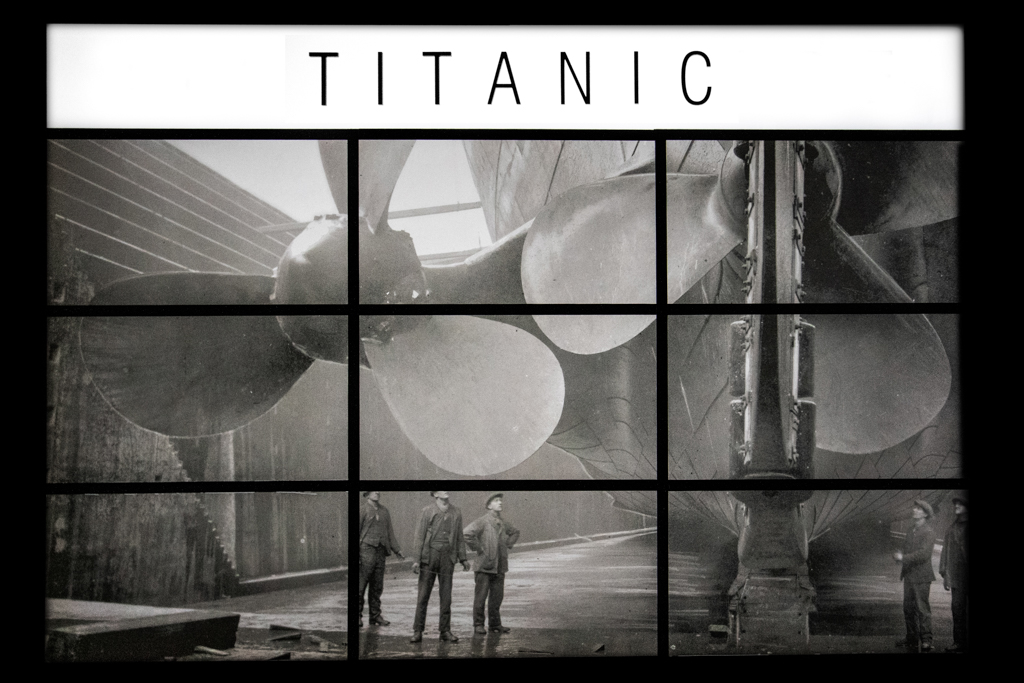
Under the Hull

You didn’t need an alarm clock in Belfast when the Titanic was being built. The sound of footsteps on pathment with thousands of workers heading to the shipyards would have been enough to wake the city. 

But the story of the Titanic is much more complicated than being a simple story about a ship. It’s a story of a love affair, about hopes and dreams, death and survival, of passion, of lust, of beauty, greed, wealth, vision and a promise of a golden age yet to come. It’s a tale of love between a ship, the city it was built in, the people that built her and the families that watched it grow into the sky at the Harland & Wolf shipyard. It’s a Belfast love story.

It makes you realise we don’t always know the scale of the things we’re standing next to — only how small they make us feel.

Howth & The Baily Lighthouse

Howth Peninsula and the Baily Lighthouse

In Ireland, while making my way around various points, I stopped off at Howth Head. Located northeast of Dublin, Howth sits on a peninsula and has some wonderful coastal walking trails. One of which takes you past The Baily Lighthouse which has had a signal light shining from it in some way shape or form for over three hundred and fifty years. Just think about that for a second – three hundred and fifty years, that’s an awfully long time! In fact, the first light signal was built on the point near Howth in 1667 and was replaced by the Baily Lighthouse 1814. With multiple tracks to choose from, I spent a few hours strolling some of the various coastal paths which certainly have impressive views. I only wish I had more time to explore them. However, as the afternoon ran on and I became short of time, I realised I hadn’t allowed myself enough time to actually make it to the lighthouse, so I returned to Howth in search of a pint of Guinness to imagine what it might look like.

Molly Malone Statue

The Molly Malone Statue in Dublin

While walking the streets of Dublin’s fair city, I turned a corner onto Church Lane where I first set my eyes on sweet Molly Malone. Approaching the statue of the famous young lady and her cart, I joined a small crowd of people who were, like me, spending a few minutes taking in the statue before moving on with their day. So, my question is this. Is young Molly really dressed appropriately to be pushing a wheelbarrow filled with Cockles and Mussels through narrow, cobblestone streets? I would have thought a low cut dress wouldn’t have been the most practical of garments to be wearing, but then again, maybe I’m showing my age. Or, maybe it’s one of those things that us males simply don’t understand. Far be it for me to be giving out fashion advice to ladies, after all I can’t even go shopping for trousers or shirts without needing some sort of female fashion consultant or advisory group to oversee my choices. However, if people want to make statues of well endowed ladies in low cut tops, who am I to argue!

The Attempted Assassination of Benito Mussolini

Merrion Square North in Dublin

Of course, Oscar Wilde wasn’t the only famous resident of Merrion Square. The area has had many notable residents that include politicians, surgeons, judges, physicians, physicists, poets, playwrights, authors and fashion designers. It seems that the little plaque I found, placed by the Dublin Tourism office, wasn’t so rare after all. In fact, they appear quite regularly on the Georgian houses that surround the entire area, and it’s an impressive list. At various times, residents of Merrion Square have included Oscar Wilde, Sybil Connolly, Louise Kennedy, Sheridan Le Fanu, Daniel O’Connell, George Russell, William Yeats and Violet Gibson. Goodness me, what a street!

So, just who is Violet Gibson? Well, she is the lady who attempted to assassinate Italy’s Benito Mussolini in Rome on the 7th April, 1926. According to reports, having delivered a speech to the International Congress of Surgeons, Mussolini stepped outside into the fresh spring air where he was greeted by a large crowd, eager to catch a glimpse of the Italian Prime Minister. As he did so, Irish-born Violet pushed her way through the crowd, a revolver disguised in her black shawl. Then, as Mussolini walked into the crowd, saluting to his adoring supporters, he turned to his right to address a group of young men chanting his name. Suddenly, two gunshots rang out into the air and blood appeared on Mussolini’s face. A bullet having scraped his nose. As Violet went to fire a third time, the gun jammed, giving onlookers a chance to wrestle her to the ground before police arrived and took her into custody. In the preceding days and years the reason for the attempted assassination never became fully clear. Violet herself first claimed that she never shot him at all, then she did it for religious reasons and finally saying she didn’t know why she shot him. Eventually, Violet was deported back to England where she was declared insane and forced to live in an institution until her death in 1956. Whereas Mussolini lived for another 19 years, before he was forced to flee Italy in the closing months of World War II when he was shot and killed crossing the border into Switzerland.

Oscar Wilde House

Oscar Wilde House

I left St Stephen’s Green where among other things I had been watching squirrels and talking to a man named Daniel who was feeding pigeons. From there, I walked for some time, in no-particular direction taking in the streets of Dublin. Every so often, I would come to an intersection where I would decide on the direction I took by way of how interesting the street seemed. If nothing seemed appealing, I would simply head off along a path. This amused me for some time, until I came to an intersection where Merrion Street West, Merrion Street Lower, Merrion Street North and Clare Street all converged. Crossing the road I spied a helpful disc stuck to the side of a building by the Dublin Tourism office. Like most places around the world, they put these up on buildings to help people like me know that this building is worth taking note of. 

In this case the plaque read ‘Oscar Wilde 1854 – 1900’, Poet, Dramist, Wit, Lived Here 1855 – 1878.’ Taking a second to process this information, it suddenly dawned on me that I had inadvertently and quite by chance come across Merrion Square and the home of the one and only Oscar Wilde. While disappointed the building was closed, I was nevertheless pleased with my find. I took a minute to take in my surroundings as people pushed past me on the wintry afternoon, clearly annoyed at the valuable space I was taking up for no apparent reason. Making up my mind that I needed to digest this find a wee bit further, I immediately headed for the nearest pub, where I ordered a pint of Guinness and settled in to read about the life and times of the famous Oscar Wilde.

Across the River Liffey

Apartments on Wolfe Tone Quay in Dublin

Back to the streets of Dublin and looking across the River Liffey from Victoria Quay. This shot made me think, I don’t actually take a lot of vertical shots anymore. My first thought is always to shoot horizontally. Maybe that is something I should change.

Belfast’s Finest

The Crown Liquor Saloon in Belfast

Once upon a time this Belfast pub had the reputation as one of the finest Victorian gin bars in the whole of the British Isles. Known as the Crown Liquor Saloon dating back to 1826 it features stained glass windows, mosaic tiling, an amazing carved ceiling. There are also 10 snugs that had gun metal plates for striking matches and an alarm bell system for patrons to alert staff for service. It’s a true masterpiece in bar design and architecture.

Corn Market In Belfast

Corn Market and Arthur Square in Belfast

If I went back to Belfast I would take a lot more photos than I did! It really is an interesting and fascinating city with something intriguing around every corner. On my wanderings I found this location, the corner of Corn Market and Arthur Square which is also an entrance to Victoria Square shopping mall and the location of the Spirit of Belfast art sculpture.  Personally, I couldn’t help but wonder about that street name, Corn Market. There must be some type of historical context to it.

The Bankers Bar In Dublin

The corner of Dame Lane & Trinity Street in Dublin.

While we are on the subject of photos from Dublin, this one I took while zigzagging through the city streets on a balmy evening in early January. I can’t remember where I was coming from, it might have been a restaurant. However, I do know I was heading for the Stags Head at the end of Dame Lane. A location where a tavern has existed in some shape or form since the 1780’s.

The Great Irish Hunger

The Irish Famine Sculptures of Dublin

This is another unpublished photo I came across. While in Dublin, I was walking alongside the River Liffey in the city’s Docklands on Custom House Quay. It was then that I came across the Irish Famine statues. An event that had a profound effect on Ireland and the worldwide Irish Community. There are a great many stories of the Great Irish Famine (1845-1849), many of which are hard to read due to the level of suffering that was involved.

One story is that of Rodger Cantwell and his family who survived the Irish famine that began in 1845. At the age of 30, living and working as farm laborer on the estate of Englisman George Fawcett in Toomevara, Tipperary, he and his wife Mary had come to rely on the potato as their main source of sustenance.

On a bleak October morning in 1845, after a prolonged period of heavy rain, he awoke to find a dense blue fog had settled over his fields. The air filled with the scent of decay. He was soon to discover, like his many neighbors, that his entire potato crop had been destroyed. For Rodger and his wife, the next few years were miserable. Often hungry, underweight and in ill health, the Indian corn and maize provided by the English as relief only managed to cause abdominal pain and diarrhea. To make matters worse, while the Irish farmers were starving, food exports to England that included oats, bacon, eggs, butter and beef continued. Eventually, many Irish farm laborers were dislodged from their homes by English landlords who hired crews to destroy their lodgings. Overnight, families found themselves starving and homeless. For people like Mary and Rodger, they joined the many waves of migrants fleeing starvation by immigrating overseas to places like America. 

Rodger and Mary Cantwell went on to settle in Rochester, New York before shifting to Milwaukee where they raised a family. Rodger eventually passed away at the age of 55 in 1870 while his wife Mary lived to the age 76. 

Following the Irish famine, between 1845 and 1855, the population of 8.2 million was reduced by one-third with 1 million dying of starvation and disease. Another 2 million emigrated to other countries. The Famine statues on Custom House Quay, are a somber and poignant commemoration of one of the most profound disasters in Irish history.

Daniel of Dublin

Daniel of Dublin

Amongst the jigsaw puzzle streets of Dublin that twist and turn across the city, you’ll find St Stephen’s Green. Within St Stephen’s Green, I found a man called Daniel. The few items that he was carrying with him were carefully placed on a park bench while he chatted to anyone who would stop by to talk. He was polite and friendly and spoke in a gravelly tone that told of a less than comfortable life on the streets of Dublin. He spoke of having many favourite spots in the city centre but this spot was by far his favourite. Manly because of how peaceful it is and the calmness of the place. Then just as he spoke they arrived, pigeons. Lots and lots of pigeons. 

It turns out that Daniel works for one of the homeless shelters in Dublin. Collecting money and donations, along with doing other ‘odds and ends’ that need to be done. But, what he really likes to do is feed the pigeons. As he threw seed out for them and gently poured it into the hands of strangers who stopped, the pigeons were quick to find the food source. In an instant, three to five pigeons were on heads, shoulders and arms, gently pecking. Suddenly, as quickly as they had arrived they were off into the sky. They swooped in a massive loop before landing in exactly the same spot and continuing their hunt for food.

Only then in the peace and beauty in Dublin’s St Stephen’s Green did he ask for a small donation.

Bray At Dusk

Bray at dusk – Buy 

I was heading to Clover Hill in South Bray, not that I really knew where that was. Even on the way there, I can’t say I was completely sure where I was going. I’d left Dublin by train and around 40 minutes later I arrived at the train station in Bray. From there, I walked down Quinsborough Road, which took me past the lovely Duncairn Terrace which was lined with multi-storey houses that were filled with lights and while Christmas decorations hung in the window. Further on, as Quinsborough Road turned into Herbert Road and the terraced houses turned into shops the last of the sunlight disappeared on what was an usually warm, winters evening.

The Crown Liquor Saloon

The Crown Liquor Saloon – Buy 

I went here on advice and I was really pleased I did. Known as ‘The Crown Bar’ but also the ‘Crown Liquor Saloon’, it’s one of the most famous pubs in Belfast. Dating back to 1826 and refurbished in 1885, it had the reputation as one of the finest Victorian gin palaces in the British Isles that features stained glass windows, mosaic tiling, an amazing carved ceiling. There are also 10 snugs that were made for the more reserved customer in the Victorian area that still has the original gun metal plates for striking matches and antique alarm bell system for alerting staff for service. It’s a true masterpiece in bar design and architecture.

Malahide In Ireland

Melahide Seawall in Ireland – Buy

Among the many things to like about Malahide in Dublin is the fact that it has a castle, it is very walkable and it has many wonderfully hospitable pubs. I spent a very lovely afternoon wandering past the seawall, along the beach and following the Coast Road to a point where I was no longer sure where I was. Then, I turned around and decided the walk back would be sufficient enough to have earned a beer at the delightful local tavern called Gibney’s. That’s the wonderful thing about Ireland, you either get rewarded with alcohol or food and often it’s both!

St Patrick’s Cathedral In Dublin

St Patrick’s Cathedral, Dublin – Buy

I missed the point in history when gift shops started popping up in Churches, but then I also missed the point when all politicians, heads of state and Kings and Queens were honest loyal citizens who were respected and looked up to for their integrity and principles. The pages of history are littered with nobles and powerful families who act in ways that seem to range from just a little peculiar to acts of complete lunasee. 

In the 15th Century, two powerful Irish families that competed for positions of power were the Butlers and the Fitzgeralds. The Butlers of Ormonde and the Fitzgeralds of Kildare didn’t like each other very much. Saying that these two Irish clan’s found each other repugnant might even be a little kind. The fact is that these two families despised each other. 

At the time of 1492, parts of Ireland were ruled by the King of England (The King of England was also the Lordship of Ireland) who was Henry VII. As Henry was a very busy person and couldn’t be in two places at once, he was represented locally in Ireland. At this time in Ireland, the King’s representative was called the Viceroy of Ireland. As the Viceroy was also a very busy person, he too had a deputy. This position was called the Lord Deputy. It was this high position of office that the powerful James Butler and Gerald Fitzgerald were bitterly arguing over. Unfortunately the appointment of Lord Deputy of Ireland in 1492 was not the honest, calm and well-mannered debate of modern day elections. The years of hostility, bickering and disagreement between the two families broke out into a violent conflict of outright warfare.

Outside the city walls of Dublin, the fighting escalated into a brutal battle which obviously started to go badly for the Butler’s as he and his followers took refuge at St Patrick’s Cathedral. Once at the Cathedral, the Butlers then bolted themselves inside the Chapter House. Angered by this, Fitzgerald followed them into the Cathedral, thumping on the door that separated the Cathedral from the Chapter House, demanding they come out. Afraid they would be slaughtered, the Butlers refused. 

Fortunately sanity took hold of the situation when Fitzgerald realised that here were two families, living in the same country, worshiping in the same church, trying to kill each other.  Needing to show his honest intent, Fitzgerald ordered a hole be cut in the middle of the door. When it was finished, an undefeated and defenceless Fitzgerald, at risk of having his arm chopped off, thrust it through the hole and extended his hand in peace. 

At once, Sir James Butler realised that the offer of peace was a serious one, took his hand, shook it and unlocked the door to the Chapter House of St Patrick’s. Restoring peace to the Butlers and Fitzgeralds families, giving us the phrase “to chance your arm” and the Cathedral a nice little gift shop 520 years later.

Now I’m not suggesting this is the way we should solve all our political disagreements or that politicians should risk having their arm chopped off however the idea has some merit. An action like this requires a test subject who would be willing to blindly stick their arm through a hole to a waiting angry mob for no other reason than to prove a point. I would like to suggest we try first with Donald J Trump.


Want to get a print for your wall? Download the print price guide below, then email [email protected] with your details and we’ll get an order underway for you.

Arthur Square, Belfast

Arthur Square, Belfast

I love the shapes in this image. I’d been wandering around Arthur Square for a while, looking at all the buildings and foot traffic that was passing by. I thought the shape of this building was simply brilliant and there was also an art sculpture that was also very funky. I wanted to see if I could combine the two shapes so as people passed by, I’d adjust my camera small amounts at a time.


Want to get a print for your wall? Download the print price guide below, then email [email protected] with your details and we’ll get an order underway for you.

Print Price Guide 2021 – Download

Belfast & The Titanic

Titanic Belfast

Venturing through a new city while it is raining is a very frustrating exercise due to the fact that knowing where you are requires you to observe your surroundings. This is something that is very difficult to do if you’re trying to duck and weave around rain drops at the same time. This was just the case when I arrived at the former Harland & Wolf shipyard, otherwise known as the Titanic Quarter in Belfast. 

Upon arrival, shaking the rain off like a wet dog and noticing the rather large puddle of water I had created, I was suddenly startled with a cheerful ‘good morning.’ Having moved through the entrance way, I was now aware of the sizable water obstacle I had made right in the doorway of Belfast’s popular ‘Titanic Experience.’ Replying to the ‘good morning’ with a sheepish ‘sorry’ I moved towards the direction of the ticket booths. It was at this point that it struck me how appropriate it seemed to be drenched in rain, visiting a museum about a ship that sunk. It also struck me how empty the place was, this was partially by design and partially by hope.

With my ticket in hand and the clock sitting just before 10am, I made my way through the near deserted foyer. The plan had been to arrive early and thus avoid long lines and lots of slow moving crowds. Adding to this plan was the fact that the school holidays had finished and people had returned to work after the December/January festive season. Pleased with the success of this planning and having paid the entry fee while watching people avoid the water jump I had created, I headed for the escalator with a head full of Titanic excitement. 

I have to admit I fall into the group of people who find the Titanic fascinating. I also have to admit that I agree with James Cameron. I agree that the Titanic is a love story. I’m not sure it’s the epic, romantic disaster tale that James Cameron showed us in 1997, but it is a love story nonetheless. My visit to Belfast showed me that it’s not a romantic story between two people, it’s much more complicated than that. It’s a story of a love affair, about hopes and dreams, death and survival, of passion, of lust, of beauty, greed, wealth, vision and a promise of a golden age yet to come. It’s a tale of love between a ship, the city it was built in, the people that built her and the families that watched it grow into the sky at the Harland & Wolf shipyard. It’s a Belfast love story.

* * *

Speaking of the Titanic, let’s talk about acts of heroism. Let’s talk about John Jacob Astor IV. In the early hours of April 15th, 1912, just after 1:55am on a clear, star light night Astor stood smoking a cigarette. Having just kissed his darling wife and helped her into lifeboat Number 4,  he watched the lifeboat get lowered into the water, having given his own place to two scared and frightened children. You can only imagine what would have been going through his mind as he watched the boat lower without him. Seven days later Astor’s body was found and identified by the initials sewn on the label of his jacket. Found on him was a gold pocket watch which his son Vincent wore for the rest of his life. Some time later, while his wife and unborn child sat in a lifeboat, a survivor claimed to have seen Astor in the water clinging to a raft with supposedly frozen feet. At some point the coldness forced him to release his hold. 


Want to get a print for your wall? Download the print price guide below, then email [email protected] with your details and we’ll get an order underway for you.

Print Price Guide 2021 – Download

So This Is Christmas

A Walk At Christmas

I made a very stupid decision the other day. I decided to try and find a place to park in town. After my plan to easily slip into a space in one of the many parking buildings was quickly thwarted, I then joined the other like minded drivers who were making multiple laps around the city centre. If ever there was a breeding ground for road rage, this was surely it. After some time, and resisting the temptation to yell helpful driving tips out the car window, I eventually found a spot and skillfully maneuvered into it. Upon leaving the car, I found that in actual fact I was only a block from home. (But of course this is not true!) Proceeding on foot, sometime later I reached my destination of the local mall. On entry, I found myself listening to Michael Buble telling me that was ‘beginning to look a lot like Christmas.’ Apparently, everywhere I went. 

See full post & more photographs

Butlers & Fitzgeralds

To Chance Your Arm

I missed the point in history when gift shops started popping up in Churches, but then I also missed the point when all politicians, heads of state and Kings and Queens were honest loyal citizens who were respected and looked up to for their integrity and principles. The pages of history are littered with nobles and powerful families who act in ways that seem to range from just a little peculiar to acts of complete lunasee. 

In the 15th Century, two powerful Irish families that competed for positions of power were the Butlers and the Fitzgeralds. The Butlers of Ormonde and the Fitzgeralds of Kildare didn’t like each other very much. Saying that these two Irish clan’s found each other repugnant might even be a little kind. The fact is that these two families despised each other. 

At the time of 1492, parts of Ireland were ruled by the King of England (The King of England was also the Lordship of Ireland) who was Henry VII. As Henry was a very busy person and couldn’t be in two places at once, he was represented locally in Ireland. At this time in Ireland, the King’s representative was called the Viceroy of Ireland. As the Viceroy was also a very busy person, he too had a deputy. This position was called the Lord Deputy. It was this high position of office that the powerful James Butler and Gerald Fitzgerald were bitterly arguing over. Unfortunately the appointment of Lord Deputy of Ireland in 1492 was not the honest, calm and well-mannered debate of modern day elections. The years of hostility, bickering and disagreement between the two families broke out into a violent conflict of outright warfare.

Outside the city walls of Dublin, the fighting escalated into a brutal battle which obviously started to go badly for the Butler’s as he and his followers took refuge at St Patrick’s Cathedral. Once at the Cathedral, the Butlers then bolted themselves inside the Chapter House. Angered by this, Fitzgerald followed them into the Cathedral, thumping on the door that separated the Cathedral from the Chapter House, demanding they come out. Afraid they would be slaughtered, the Butlers refused. 

Fortunately sanity took hold of the situation when Fitzgerald realised that here were two families, living in the same country, worshiping in the same church, trying to kill each other.  Needing to show his honest intent, Fitzgerald ordered a hole be cut in the middle of the door. When it was finished, an undefeated and defenceless Fitzgerald, at risk of having his arm chopped off, thrust it through the hole and extended his hand in peace. 

At once, Sir James Butler realised that the offer of peace was a serious one, took his hand, shook it and unlocked the door to the Chapter House of St Patrick’s. Restoring peace to the Butlers and Fitzgeralds families, giving us the phrase “to chance your arm” and the Cathedral a nice little gift shop 520 years later.

Now I’m not suggesting this is the way we should solve all our political disagreements or that politicians should risk having their arm chopped off however the idea has some merit. An action like this requires a test subject who would be willing to blindly stick their arm through a hole to a waiting angry mob for no other reason than to prove a point. I would like to suggest we try first with Donald J Trump.

St Patrick’s Cathedral, Dublin

Continue reading Butlers & Fitzgeralds