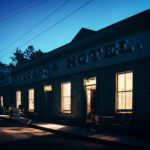
Centre Place Lane in Melbourne

Live in Centre Place Lane – Melbourne

Daily Photo – Centre Place Lane in Melbourne

I left the market and caught a tram into the heart of Melbourne’s CBD. After a short journey I alighted at a stop that read “Bourke Street Mall” and walked a block or two until I found myself outside St Paul’s Cathedral on what was called Swanson Street.

It was then that I suddenly realized I was rather hungry and so went looking for a place to eat – a job that you might expect to be relatively easy in a place widely considered the culinary capital of Australia. But that’s the thing about Melbourne: the city wants you to eat out as soon as you get there, launching an assault on your senses that only the very strongest of wills can resist. This is due in no small part to the fact that the city is home to more than 3,500 restaurants and cafes serving cuisines from over 70 different countries. Take Lygon Street in Carlton as an example; this “Little Italy” precinct boasts approximately 100 restaurants, cafes, and bars alone – and that’s just one street.

Consequently, choosing a place to eat becomes insanely difficult, mainly owing to the fact that there are so many options. Give me a choice between seafood and Italian and I can usually manage, add Indian, Chinese, Greek and a range of Lebanese and Asian influences to the mix and things start to get complicated. But multiply those choices by a thousand and you have a situation that is frankly alarming.

Walk down any central Melbourne street and you’ll find long queues to establishments that are now city institutions. But that doesn’t matter because you can always duck down an alleyway or side street and find a cafe that is impossibly small and roughly the same size as your living room, squeezed between two equally small eateries that nevertheless welcome you like a long lost friend, which is what I did now.

From Swanson Street I turned into Flinders Lane and then again into a small alleyway not more than 2 metres wide and 50 metres long called Centre Place. 

Centre Place was transformed from a neglected service alley into a revitalised laneway by the City of Melbourne and the Victorian State Government in the 1980s, and they’ve done it exceedingly well. The alleyway is tiny, yet it holds upwards of 20 small scale cafes, sushi bars and eateries and is as much a tourist destination as it is a venue, and choosing a place to eat can be quite an overwhelming task. Fortunately the job is made easier by a series of maître d’s eagerly enticing you in.

I was on my second lap down the lane when I must have said out loud “ooh Eggs Benedict” as no sooner had the words left my mouth than a pretty young waitress dressed all in black and clothing that left little to the imagination stepped forward and pointed out they also do a New York version featuring a beef brisket. Well, before I knew what was happening I was seated, had ordered and a glass of coke was being placed in front of me by a young man in equally tight clothing and a multitude of piercings that frankly looked like they’d be both painful and annoying. From my vantage point at a table that was placed where a window once sat, I watched the comings and goings of a busy lane in the heart of Melbourne. It really was quite fascinating to watch the people drift by, and for a cafe that couldn’t have been more than 50 square metres, the food was exceedingly good.

Satisfied and full, I paid by waving my phone at a machine on the counter, a neat trick I’d recently been taught by both my wife and daughter a few nights earlier, and stepped out into the throng of foot traffic to consider my next options. 

Melbourne’s Queen Vic Market

Live at Queen Vic Market – Melbourne

Daily Photo – Melbourne’s Queen Vic Market

When one of Melbourne’s founding father’s, John Batman died in May of 1839, he was 38 years old and buried in the Old Melbourne Cemetery. While his name would forever be linked with founding the city of Melbourne, his death wasn’t so heroic. In fact, it was rather tragic. Having contracted syphilis, the disease quickly took over his body, he became disfigured, crippled and in the final months of his life, the disease was so advanced that his nose had rotted away, he became incapacitated and had to be pushed around in a wicker carriage. He died in debt, estranged from his wife and alone. His funeral was a modest, yet well attended affair, after which he was buried in the Old Melbourne Cemetery. In the coming years he would be joined by merchants, Ministers and many other of the city’s earliest settlers until the cemetery was closed for burials in 1854. 

Throughout this time, Melbourne grew at a lively pace and small wholesale and retail markets started popping up to serve the rapidly growing population. One of which surrounded the Old Melbourne Cemetery. As the market encroached on the cemetery, the public outcry became furious and proved unpopular with market gardeners and  traders who refused to use the space – fearing disease and the disrespect of selling food over graves. 

That was until 1876 when everything changed. The Victorian Government passed an Act officially gazetting the Old Melbourne Cemetery site as land to be reserved and developed into markets. A year later as bodies and skeletons were exhumed and re-interred at the Melbourne General Cemetery – things got a little messy. You see, back in 1864, a fire at the lodge belonging to the Old Melbourne Cemetery gatekeeper destroyed most of the burial registers. This meant when it became time to exhume most of the bodies, officials had absolutely no idea who was buried and where. So while identified graves were shifted, some 6,000 to 9,000 graves remained buried as the new market space was developed and officially opened as The Queen Victoria Market on the 20th March, 1878.

The City of Melbourne

Daily Photo – Tram on Elizabeth Street in Melbourne

I was flying to Melbourne, a city that was settled twice, in two different decades, in two separate locations, by two different groups of people. The first attempt took place in late 1803 and was a spectacular failure. Led by a man named Lieutenant-Governor David Collins, a British army officer, colonial administrator and newly appointed Governor of the intended settlement, the expedition set sail from England on 27 April 1803 aboard the HMS Calcutta. The purpose of the trip was to establish a penal colony and secure the southern coastline of Australia for the British, before the French laid claim to it. Accompanying Lieutenant Collins in his wee fleet was a dozen Civil officers and administrators, 50 Royal Marines, 50 free settlers and their families, 300 male convicts and around 16 convict wives who had come along for the ride. 

The party arrived at the chosen site of Sullivan Bay on the Mornington Peninsula in late October 1803 and set about clearing land, constructing shelters, storehouses, developing a parade ground and completing other tasks vital to their survival. However, within a month it became clear the site was poorly chosen at best. The sandy soil was difficult to work with, there was a lack of fresh water, the timber unusable for building, crops struggled and morale quickly dipped. By January they’d decided to abandon the settlement and in February the expedition packed-up and sailed for Van Diemen’s Land, landing on the banks of the Derwent River – thus establishing what is now known as the city of Hobart. The entire experiment had lasted 14 weeks and was a complete failure in establishing a British presence on the intended coastline. 

Thirty years later, in June 1835 colonial settler and part time explorer John Batman returned to Van Diemen’s Land, having completed what can only be described as a short, brief trip. Traveling with a group of likeminded Tasmanian settlers, they’d been tasked with looking for new land, suitable for grazing and one of the areas they explored was beyond the abandoned Sullivan Bay site in a place called Port Phillip. Here Batman claimed to have negotiated a treaty with local Aboriginal and recorded in his diary: “This will be the place for a village.”  It was by no-means a long, drawn-out expedition. Batman had crossed Bass Strait, explored quickly, made his claim, and returned within a month.

Things progressed quickly! In August settlers arrived on the banks of the Yarra River and began establishing a permanent camp – a mere 60 kilometres from the original 1803 site. Unlike the attempt made by Collins, the northern banks of the Yarra River proved much more suitable. It supplied a reliable source of fresh water, better soil, shelter and was much more practical. From there, the settlement took off with surprising speed. Within a year rough streets were beginning to form, basic buildings replaced tents and the population had grown to some 200 people. By 1837 land sales had begun, the population had sprung to nearly 1000 people and the location was officially given the name – Melbourne. 

Swanston Street in Melbourne

Daily Photo – Ambling on Swanston Street in Melbourne

I like Melborune, partly because it is very walkable and easy to navigate thanks to all the bridges across the river, but mostly because of the trams. So, when I found myself with a day free of any planned activities, I spent the first part of the day riding trams to random locations I’d never been to before. Following that, I spent the rest of a very pleasant Melbourne day wandering its busy streets and narrow alleyways, admiring the Yarra River, its modern skyscrapers, historic architecture and bustling laneways.

It was while ambling along Swanston Street that I came across this lady who does the most colourful designs with vinyl records. I watched and chatted to her for about 10 minutes as she created new designs that would evolve right before your eyes.

Fun At The NGV In Melbourne

The NGV in Melbourne

Whoever designed the National Gallery of Victorian (NGV) in Melbourne sure had a lot of fun. It has, what is quite possibly the most outstanding floor I’ve ever seen, a stain-glass ceiling in the Great Hall (which I didn’t get to see due to not being invited to the Christian Dior event that was on, how rude!) and a wall that contains a waterfall at the entrance. How crazy is that! I had such a blast photographing inside the building, it was so cool. The place was so busy that no-one minded that I sat on the floor and photographed people walking past. I still want to return to photograph the stain-glass ceiling, one day I will!

The Melbourne Skyline

The Melbourne Skyline

The wonderful thing about Melbourne is how walkable the city is alongside the river. Much like Brisbane which has the Brisbane River running through it with South Bank looking across to the CBD, Melbourne has the Yarra River. If you’re into walking and cityscapes, then you can have a great time walking along the River Esplanade beside the Yarra River getting all sorts of photo opportunities of Melbourne’s skyline. One day I’ll return and photograph it at night, which will present a completely different set of challenges.

Southern Cross Station in Melbourne

Velluto Coffee at Southern Cross Station in Melbourne

Thirsty and hungry, I wearily I trudged through Southern Cross Station in Melbourne, that marvel of modern transportation architecture, presented itself in a manner that was nothing short of exhilarating. I was hot and tired, yet bathed in the golden glow of late afternoon light, the station seemed less like a hub of trains and more like a grand cathedral of travel. There, nestled comfortably under the sprawling, undulating roof—a roof that appeared to have been designed by a collaboration of science-fiction enthusiasts and overly enthusiastic origami experts—was a modest coffee stand by the name of Velluto.

The kiosk, with its clean, curved lines and warmly lit sign, was a beacon for the weary traveller in need of caffeine sustenance. It had a kind of quiet charm, as though it were saying, “Yes, you’re in a rush, but there’s always time for a good coffee.” The wooden panels along its top gave it a slightly rustic appeal, which was wonderfully at odds with the sleek, modern design of the station around it. The glow from the overhead lights cast a soft, inviting sheen on the counter, where an amiable barista attended to a customer who appeared to be contemplating the menu with the seriousness one usually reserves for selecting a life partner.

Behind the counter, the machinery of coffee creation hummed and whirred, promising the robust aroma and the soothing warmth of a perfectly brewed cup in that fleeting moment, Velluto was more than just a coffee stand. It was a small sanctuary in the bustling, architecturally impressive style of Southern Cross Station, offering a brief respite from the relentless march of time and travel.

Centre Place Laneway In Melbourne

Centre Place in Melbourne

The other day I mentioned that I didn’t take nearly as many vertical photos as horizontal ones. With that statement in mind, I went looking for some unpublished vertical images to prove to myself that I actually did take them. This is one I found taken on the streets in Melbourne, Centre Place laneway to be precise. I always thought it was called Degraves Lane, however it seems that Degraves Lane is just across the road and this one has a completely different name. Either way, both lanes are filled with amazing places to eat, featuring cuisine from all over the world.

Swanson Street In Melbourne

Painted Vinyl on Swanson Street

I spent a pleasant afternoon in Melbourne, wandering its busy streets and narrow alleyways before and after lunch, admiring the Yarra River, its modern skyscrapers, historic architecture, bustling laneways and looking forward very much to seeing it in the evening. I like Melborune, partly because it is very walkable and easy to navigate thanks to all the bridges across the river, but mostly because of the trams.

Melbourne’s Evan Walker Bridge

The Evan Walker Bridge in Melbourne

Walking across the Evan Walker Bridge in Melbourne felt like stepping into a postcard where an urban landscape blends with a sense of whimsical charm. The Yarra River ambling its way past the city’s modern heart. On one side, Southbank’s bustling promenade with cafés and street performers, their eclectic sounds mingling in the air. On the other, the historic Flinders Street Station stands as a monument  to yesteryears, its yellow facade glowing in the afternoon sun. As I strolled, I could help but marvel at Melbourne’s effortless fusion of old and new.

Melbourne’s Webb Street Bridge

The Webb Bridge in Melbourne – Buy 

The last time I was in Melbourne I went exploring along the Yarra River to look at all the different bridges, which are quite amazing. There are so many of them, I must have filled at least an entire morning simply walking across bridges taking photos as each one is uniquely different in its design and construction.

The first bridge I found was the Webb Bridge which allows pedestrians and cyclists to cross over the Yarra River in the area of the Docklands and Southbank. Its design was modelled on a traditional Aboriginal Koorie fishing trap that was used to catch eels. Like most bridges, it also lights up at night, which made me think that exploring bridges that cross the Yarra River at night would make a good photowalk.

Hosier Lane in Melbourne

Hosier Lane, Melbourne – Buy

This is Hosier Lane in Melbourne. Out of all the graffiti lanes in Melbourne, this one is the most famous. Being a short walk from Flinders Street Station, at any time of the day you’ll find loads of tourists taking in the art that covers the walls of the various alleyways. In fact, some years back Hosier Lane was declared a ‘graffiti tolerance zone’ by the city council of Melbourne.


Want to get a print for your wall? Download the print price guide below, then email [email protected] with your details and we’ll get an order underway for you.

National Gallery of Victoria

When Colour And Happiness Around LayNGV

Isn’t this floor just outstanding! I find it hard to believe there would be a better floor anywhere in Melbourne. This is in the Victorian National Gallery in Melbourne. I was originally aiming to photograph the stain-glass ceiling they have there , but an event was on (held by Christian Dior I think) so I searched out the best possible vantage point to capture the floor instead. I ended up on the second floor, because the view from the second floor gave me the interplay between the brick walls and the coloured floor that I wanted.


Want to get a print for your wall? Download the print price guide below, then email [email protected] with your details and we’ll get an order underway for you.

Print Price Guide 2021 – Download

Is It Irresponsible Chasing Rainbows?

Visions, Illusions & Me.

Recently I came across something interesting in Queenstown which has occupied my thoughts off and on since. It was a faint rainbow stretching out across Lake Wakatipu. 

It isn’t the location of the rainbow itself that is of interest to me, nor the question of how rainbows are created, what drew my attention was pondering the curve of a rainbow. Or to be more precise, do they always have the same angle? I keep imagining Kermit sitting on a schist stone dipping his toes in the water of Lake Wakatipu, bango in hand, singing rainbow connection. As a rule of thumb, I would like to suggest that if like me, Kermit the frog springs to mind when you think about the science behind rainbows, you’re probably not an expert on them. 

In this moment the contemplating thoughts in my mind went in two directions. The first was what other naturally occurring scientific concepts do I not understand. The second direction was understanding the mathematics behind rainbows. I decided that trying to understand the concepts of nuclear fusion, string theory, starling murmurations and Auckland traffic was far beyond my mental capacity at this point, so I went with exploring the latter. Plus, since I now had Kermit loaded into my Spotify playlist I felt I was committed. 

My curiosity aroused, I felt there was only one place that would provide me with the facts I needed, the one place that keeps me reliably informed and up to date with the latest world developments. Google.

I feel I should point out at this juncture that I’ve become suspicious about Google and our relationship. It has soured somewhat. The long held trust and mutual respect we once held I fear has been lost. What brought our relationship to this point? Well, I suspect that Google has been lying to me. I must confess that this realisation hurts. My suspicions were aroused when a recent trip to Ireland resulted in zero Leprechaun sightings. 

As it turns out I’m not the first person to become fascinated by a rainbow outside the window, in fact I’m in very good company. Greek philosopher Aristotle devoted serious attention to the study of rainbows as did Roman theorist Lucius Annaeus Seneca (who probably peeked at Aristotle’s study notes). This cycle of building off others’ study notes before adding their own thoughts then continued for some time, right through to Rene Descartes who started playing with light passing through a sphere of water. Throughout this lineage of rainbows, one person who does seem to stand out in a very understated way is Roger Bacon. 

Not only does Roger Bacon have a fabulous last name that makes me hungry, he can also tell you how to make gunpowder! It transpires that Roger Bacon was the first European to describe in detail the process of making gunpowder. He also proposed flying machines, motorized ships and carriages some time in the 1200’s. Now anyone who is suggesting motorized machines and can tell you how to make gunpowder in the 1200’s must have been fascinating after a few beers! Along with describing how to blow things up, he also first measured the angle through which light is bent to our eye by a rainbow as being 42 degrees.  

Having discovered that the arc of a rainbow is 42 degrees, that the length of rainbow is dependent on where it is viewed from, that everyone sees a rainbow differently, that they form perfect circles (which is why you never reach the end or the bottom) and that there are 12 types of rainbow, I naively thought my pursuit of had come to an end. Until, Google threw me a curve ball. It brought me back to Leprechauns. Now, I must confess that my curious nature got the better of me and no matter how distrusting of Google I was, I went in search of pots of gold. 

I had it in mind that there would be a fairly bright and easy yellow brick road that would lead me to the end of the rainbow, however unlike Dorthey I wasn’t lucky enough to have a glowing yellow road to follow.  My own search was filled with many no exit streets, detours and wrong turns that seemed to add neither confusion or clarity to my quest until I came across the Vikings! If you want to make a story interesting, just throw in an ill tempered Viking or two to jazz up the plot. Fortunately for me, the pot of gold myth that I liked the best, had loads of Vikings in it.  

It seems that back in the days of the Vikings – who weren’t really very nice people but had amazing beards – they spent much of their time raiding, plundering and looting Irish villages for money and gold before burying it all over the countryside. Upon leaving Ireland, the Vikings proved that despite having fabulous beards they were incredibly absentminded and forgot to take their treasure with them, which was promptly found by the underground dwelling and human mistrustings Leprechauns. Knowing the origins of this treasure and claiming it for themselves, they reburied the gold. Nowadays, whenever a rainbow appears it’ll end where the gold is buried.  But then again, can you trust a Leprechaun or a Viking for that matter? No matter how fabulous his beard is! 

Until a few days ago I thought that a rainbow was simply light reflecting and bending off water droplets in the atmosphere resulting in a colour appearing. But, it transpires that they are as complicated as they are beautiful.

From all this we can draw four important conclusions. Firstly, Aristotle was a science guy as well as being a philosopher dude. Secondly, Roger Bacon would have been a wonderful drinking companion. Thirdly, the Vikings had fabulous beards but were incredibly forgetful. Fourthly that a little green frog was the most insightful of all when he observed that ‘rainbows are visions and illusions and probably contain a little touch of magic.’It seems that pursuing rainbows isn’t a bad thing after all. 

Rainbow over Lake Wakatipu, Queenstown.