The Brisbane Summer Heat

Daily Photo: Shade in the Brisbane CBD

There are times when a photograph is carefully planned, and there are other times when you simply happen to be in the right place with a camera in your hand. This was probably somewhere in between. I was out on a 30-degree Brisbane summer’s day, which, coming from Dunedin, seemed less like pleasant weather and more like someone had accidentally left the oven door open. It was the sort of heat that makes you walk a little slower, look for shade a little more carefully and wonder why you had decided that wandering around outside was such a good idea in the first place.

I had no particular plan beyond seeing what I could find. That’s often how I prefer to explore somewhere new, because once you start looking for a particular photograph, you can easily miss everything else going on around you. I was moving through the Brisbane CBD, taking in the heat, the light, the changing scenes and the shade when I came across a square covered with shade. There was something about the way the covered shade made me stop and take a second look. It wasn’t a famous viewpoint or some grand Australian landmark, just an ordinary piece city design that happened to look right at that particular moment.

I took the photograph, although I wasn’t thinking about photographic theory or trying to capture some profound statement about Australian architecture or Brisbane as a city. I simply liked what I was seeing. The whole scene was framed with interesting shapes and sections that moved my eye around yet drew me in at the same time. 

That’s one of the things I enjoy about wandering around with a camera. You don’t necessarily go looking for a photograph. Sometimes you just keep walking until something makes you slow down, look twice and decide that it is worth stopping for. On a 30-degree Brisbane afternoon, finding a reason to stop in the shade probably wasn’t a bad thing either.

Streets Beach in Parklands

Daily Photo: Brisbane’s Unexpected Beach

I came across Streets Beach quite by accident.

I’d been wandering around Brisbane’s South Bank on a summer’s day when the temperature had pushed past 30 degrees, which is about the point where walking around a city begins to feel like an unnecessary test of character. I was looking for somewhere to escape the heat for a while when I suddenly found myself looking at something I hadn’t expected to see in the middle of the city. A beach. Not a river beach, not a stretch of sand beside the sea, but a proper swimming beach sitting among the South Bank Parklands, complete with sparkling blue water, white sand and enough subtropical greenery to make the whole thing look faintly tropical.

This is Streets Beach, Australia’s only man-made inner-city beach, and it’s a rather clever bit of urban planning. Nearly 80 tonnes of white sand surround a lagoon of clear blue water, with palms and subtropical plants completing the illusion that you have somehow wandered away from Brisbane and ended up somewhere considerably closer to a tropical island. I stopped for a while and watched people swimming, sitting in the shallows and doing the sensible thing on a hot Brisbane afternoon: not walking around unnecessarily. I, of course, was walking around unnecessarily, although I was beginning to question the wisdom of this decision.

There was something wonderfully odd about the place. Behind the beach were the buildings and traffic of Brisbane, while in front of me people were lying on the sand as though they had spent the morning travelling to the coast. It was one of those unexpected city discoveries that made me stop and look twice.

And, naturally, I took a photograph.

This was slightly more complicated than photographing an old building. Standing on the edge of a busy inner-city beach with a camera pointed towards the water required a little more thought, mainly because I was keen to photograph the beach without looking like a middle-aged bloke with entirely the wrong intentions. I spent a few minutes trying to find an angle that showed the sand, water, palms and surrounding city without accidentally making myself look like I should be explaining my presence to security.

Eventually I found a spot that made sense, took a few shots, and moved on.

This is probably one of the reasons I like wandering around unfamiliar places. I rarely know exactly what I’m going to photograph when I set out. I just keep walking until something catches my attention. Sometimes it’s an old building, sometimes a forgotten corner of a town, and sometimes it’s an artificial beach in the middle of Brisbane that requires you to think carefully about where you point the camera.

On a day when the mercury had passed 30 degrees, finding a beach without having to leave the city seemed like a pretty good discovery.

The Nepalese Peace Pagoda

Daily Photo – An unexpected corner of Brisbane

I wasn’t really looking for this.

I’d been wandering around the South Bank in Brisbane, doing what I usually do in a city I’ve never quite gotten around to knowing properly, which is walking without much of a plan and seeing what turns up. Brisbane is a difficult place to wander through without eventually finding something involving water, gardens, restaurants or people wearing considerably less clothing than you are.

Then I came across this.

Tucked away among the greenery was this wonderfully ornate building, looking as though someone had accidentally transported a small piece of Nepal into the middle of Brisbane and then decided it was probably best not to mention it.

I stopped.

There was something about the contrast that appealed to me. Around it was modern Brisbane, busy paths, landscaped gardens and the general movement of a city going about its business. And here was this intricate little world of carved timber, pagoda roofs and details that demanded you stop for a closer look.

So, naturally, I took a photograph.

I don’t remember setting out that morning with the intention of photographing a Nepalese Peace Pagoda, I didn’t even know it even existed. But that’s one of the things I like about wandering. You can have a destination in mind, but the best part of the journey is the thing you didn’t know was there.

The Walter Taylor Bridge In Indooroopilly

So, I’ve got some thing new coming to my blog this Monday. Make sure you call in and check it out!

Daily Photo – The Walter Taylor Bridge in Indooroopilly

This is the Walter Taylor Bridge in Indooroopilly, one of Brisbane’s quirkiest landmarks. Opened in 1936, it’s not just a suspension bridge but once had people living inside its towers. For decades, the tollkeeper’s family called the northern pylon home, with laundry lines stretching over the traffic below.

Built by Walter Taylor using surplus Sydney Harbour Bridge cables, it was the longest span of its kind in Australia at the time. There was once even a ballroom in one tower. Practical, unusual, and full of character, it’s a true slice of Brisbane history.

Walking The Victoria Bridge In Brisbane

I listen to all sorts of music while I take and edit photos, it kinda depends on my mood. If you wanna hear what’s currently near the top of my rotation, follow This Link to Spotify.


Daily Photo – Walking the Victoria Bridge in Brisbane

This is Victoria Bridge, one of Brisbane’s busiest crossings, lit up in vivid purples and blues for the night. It spans the Brisbane River, linking the South Bank cultural precinct to the CBD. The current version of the bridge (because there have been several over the years) was opened in 1969, which makes it over 50 years old now. A respectable age for a bridge.

To be honest, I had to double check the name. For some reason, I always confuse it with the Goodwill Bridge further downstream, which is a pedestrian-only crossing. The Victoria Bridge however, is the one where the buses thunder across in both directions and if you’re walking, you can sometimes feel the vibrations of the traffic humming through the concrete.

On this occasion, it wasn’t the traffic or the practical usefulness of it all that I was interested in, but the way the lights bounced off the water below, giving the river that surreal, glassy finish. If you’re a fan of city reflections (which I’ve discovered I am), it’s one of those spots that makes you stop for a second.

I could tell you more about the history of the bridge (it’s burned down, collapsed, and been rebuilt more than once), but instead I’ll just point out that right underneath this very spot is where the old horse-drawn trams used to cross, back when Brisbane was a much sleepier place.

Shrine of Remembrance, Brisbane

Shrine of Remembrance, Brisbane 

After leaving the edge of the Brisbane River, I wandered up onto Ann Street, the pace of the city quickening around me. I had planned a short detour through King George Square, but as I reached it, I realised Brisbane’s Shrine of Remembrance was nearby. Drawn by curiosity, I entered ANZAC Square, where sunlight filtered through the trees and danced on the classic Greek revival columns that guard the eternal flame, flickering gently in the stillness. I lingered there, absorbing the atmosphere of the ANZAC spirit. Eventually, the heat of the day began to settle me. In search of shade and refreshment, I crossed the street and found solace in a cold beer at The Grand Central Hotel.

Eat Street Northshore in Brisbane

Eat Street Markets in Brisbane

When I was in Brisbane, one of the recommendations I was given was to check out the Eat Street Markets on Brisbane’s Northshore. Having been located on its present site since 2013, the owners took over an old abandoned docking site and transformed it into one of the hottest locations in Brisbane for food and entertainment every weekend. What makes it more intriguing is that the concept is really rather simple, with more than 50 shipping containers having been converted into food stalls. Located 10 minutes from the city, it’s one of Brisbane’s must do attractions to satisfy the taste buds!

Brisbane City Botanic Gardens

Brisbane City Botanic Gardens

When you come from Dunedin, a temperature of around 35 celsius is pretty extreme. To the people of Brisbane, I’m sure such temperatures are nothing new. So it was that I found myself wandering around the Brisbane City Botanic Gardens in the sweltering heat, enjoying every second of it. 

The Brisbane River

The Brisbane River

I was never aware that the European settlement history of Queensland dates back to a penal settlement. However, I shouldn’t be surprised. I had always assumed once Britain stopped sending convicts to Australia, people started emigrating and one of the locations they chose is now the city of Brisbane. It turns out, this wasn’t the case. It seems that Queensland’s European history as a settlement started when the location of Brisbane was selected in 1825 as the location for a penal settlement for the more difficult convicts in New South Wales. Thus we have a situation where Britain was sending its undesirables to New South Wales in Australia, and they sent the convicts they didn’t want to Brisbane. Maybe that’s why the rest of Australia looks at Queenslanders being a little backwards. 

The Kurilpa Bridge

The Kurilpa Bridge in Brisbane

When a name was needed for Brisbane’s new $63 million bridge, a competition was held. Local residents could submit suggestions which they did in their thousands. Among the suggestions were Aboriginal words, maritime suggestions  and names linking the bridge to its location between Tank Street and Kurilpa Park near the State Library. On 23 November 2008 it was announced that the winning entry was Kurilpa Bridge. The name Kurilpa reflects the Australian Aboriginal word for the South Brisbane area, and means “place for water rats”.

The Wheel of Brisbane

The Wheel of Brisbane

My final stop of my night walk in Brisbane was ‘The Wheel of Brisbane’ located in Southbank Parklands. I had started out before dusk at the Brisbane Central Railway Station and spent the rest of the time simply wandering aimlessly from place to place, looking at nothing in particular. After a while, I made my way through King George Square, headed along Ann Street and crossed over the Brisbane River on the Kurilpa Bridge. From there, I made my way along the South Bank which was busy with cyclists who seemed to have no regard for anyone but themselves. So, I filled some time walking at annoying angles so they’d have to swerve to miss me. Eventually, with no more cyclists to irritate, I turned my attention back to my walk and the Wheel of Brisbane which was glowing in the distance.

Osteria Epoca In Brisbane

Osteria Epoca In Brisbane

Osteria Epoca can be found on Orontes Road, Yeronga in Brisbane. They are an amazing Cafe, Bar & Restaurant that does serious good Italian food. When I was there they let me set my camera up to take a few shots, the one I like best is this one of the front window. It’s definitely worth visit if your in Brisbane or the area . Oh, and the Porchetta, Crab linguni or Gamberi come highly recommended.

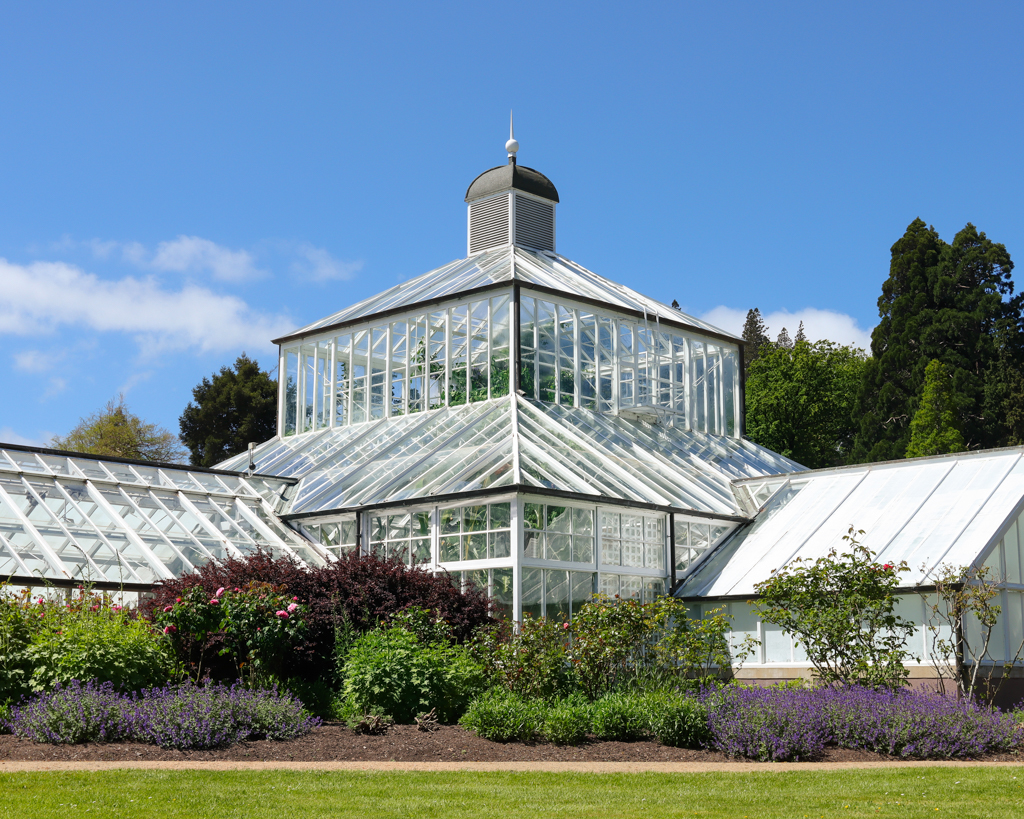
#dailypic

#wintergardenglasshouse

Brisbane City Hall

Brisbane City Hall

On one of my evenings strolls through Brisbane I came across the City Hall which can be found in King George Square. The building is as elegant as it is grand. Yet, not without controversy, and I do like a bit of controversy when it comes to local government buildings. 

In the early 1900’s after it was decided that the current City Hall was inadequate, and after many years of debate over where the new site for the building should be, a possibility of two locations was decided upon. However, Mayor Charles Jenkinson then sold one of the two sites to the Cathlolic Church, who promptly started construction of a Cathedral, leaving the City Hall to be built on the site which it stands today. 

Several years later the foundation stone for the City Hall was laid with a time capsule inside before construction started. However, the stone was discovered to be out of alignment, moved, then lost – along with the time capsule. 

Later, following the death of a construction worker who drowned while the swamp where the building was going to stand was drained, the Council began occupancy of the building in 1927. Nearly 20 years after the plans had been confirmed and the site was first chosen.

The Kurilpa Bridge In Brisbane

By The Brisbane River

This is what a $63 million (AU) hybrid tensegrity bridge looks like at night. It’s official name is the Kurilpa Bridge, opened in 2009 and it connects Kurilpa Point in South Brisbane to Tank Street in the Brisbane CBD. I’ve included all this information to try and disguise the fact I can’t explain what a tensegrity bridge is. I could have Googled it and included the definition (written in my own words), however there were two reasons why I didn’t. One, I didn’t want to sound condescending and assume other’s didn’t know what it might either. Two, I was more interested in finding out that the aboriginal word Kurilpa means ‘place of water rats.’

Is It Irresponsible Chasing Rainbows?

Visions, Illusions & Me.

Recently I came across something interesting in Queenstown which has occupied my thoughts off and on since. It was a faint rainbow stretching out across Lake Wakatipu. 

It isn’t the location of the rainbow itself that is of interest to me, nor the question of how rainbows are created, what drew my attention was pondering the curve of a rainbow. Or to be more precise, do they always have the same angle? I keep imagining Kermit sitting on a schist stone dipping his toes in the water of Lake Wakatipu, bango in hand, singing rainbow connection. As a rule of thumb, I would like to suggest that if like me, Kermit the frog springs to mind when you think about the science behind rainbows, you’re probably not an expert on them. 

In this moment the contemplating thoughts in my mind went in two directions. The first was what other naturally occurring scientific concepts do I not understand. The second direction was understanding the mathematics behind rainbows. I decided that trying to understand the concepts of nuclear fusion, string theory, starling murmurations and Auckland traffic was far beyond my mental capacity at this point, so I went with exploring the latter. Plus, since I now had Kermit loaded into my Spotify playlist I felt I was committed. 

My curiosity aroused, I felt there was only one place that would provide me with the facts I needed, the one place that keeps me reliably informed and up to date with the latest world developments. Google.

I feel I should point out at this juncture that I’ve become suspicious about Google and our relationship. It has soured somewhat. The long held trust and mutual respect we once held I fear has been lost. What brought our relationship to this point? Well, I suspect that Google has been lying to me. I must confess that this realisation hurts. My suspicions were aroused when a recent trip to Ireland resulted in zero Leprechaun sightings. 

As it turns out I’m not the first person to become fascinated by a rainbow outside the window, in fact I’m in very good company. Greek philosopher Aristotle devoted serious attention to the study of rainbows as did Roman theorist Lucius Annaeus Seneca (who probably peeked at Aristotle’s study notes). This cycle of building off others’ study notes before adding their own thoughts then continued for some time, right through to Rene Descartes who started playing with light passing through a sphere of water. Throughout this lineage of rainbows, one person who does seem to stand out in a very understated way is Roger Bacon. 

Not only does Roger Bacon have a fabulous last name that makes me hungry, he can also tell you how to make gunpowder! It transpires that Roger Bacon was the first European to describe in detail the process of making gunpowder. He also proposed flying machines, motorized ships and carriages some time in the 1200’s. Now anyone who is suggesting motorized machines and can tell you how to make gunpowder in the 1200’s must have been fascinating after a few beers! Along with describing how to blow things up, he also first measured the angle through which light is bent to our eye by a rainbow as being 42 degrees.  

Having discovered that the arc of a rainbow is 42 degrees, that the length of rainbow is dependent on where it is viewed from, that everyone sees a rainbow differently, that they form perfect circles (which is why you never reach the end or the bottom) and that there are 12 types of rainbow, I naively thought my pursuit of had come to an end. Until, Google threw me a curve ball. It brought me back to Leprechauns. Now, I must confess that my curious nature got the better of me and no matter how distrusting of Google I was, I went in search of pots of gold. 

I had it in mind that there would be a fairly bright and easy yellow brick road that would lead me to the end of the rainbow, however unlike Dorthey I wasn’t lucky enough to have a glowing yellow road to follow.  My own search was filled with many no exit streets, detours and wrong turns that seemed to add neither confusion or clarity to my quest until I came across the Vikings! If you want to make a story interesting, just throw in an ill tempered Viking or two to jazz up the plot. Fortunately for me, the pot of gold myth that I liked the best, had loads of Vikings in it.  

It seems that back in the days of the Vikings – who weren’t really very nice people but had amazing beards – they spent much of their time raiding, plundering and looting Irish villages for money and gold before burying it all over the countryside. Upon leaving Ireland, the Vikings proved that despite having fabulous beards they were incredibly absentminded and forgot to take their treasure with them, which was promptly found by the underground dwelling and human mistrustings Leprechauns. Knowing the origins of this treasure and claiming it for themselves, they reburied the gold. Nowadays, whenever a rainbow appears it’ll end where the gold is buried.  But then again, can you trust a Leprechaun or a Viking for that matter? No matter how fabulous his beard is! 

Until a few days ago I thought that a rainbow was simply light reflecting and bending off water droplets in the atmosphere resulting in a colour appearing. But, it transpires that they are as complicated as they are beautiful.

From all this we can draw four important conclusions. Firstly, Aristotle was a science guy as well as being a philosopher dude. Secondly, Roger Bacon would have been a wonderful drinking companion. Thirdly, the Vikings had fabulous beards but were incredibly forgetful. Fourthly that a little green frog was the most insightful of all when he observed that ‘rainbows are visions and illusions and probably contain a little touch of magic.’It seems that pursuing rainbows isn’t a bad thing after all.