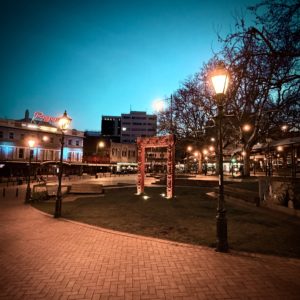
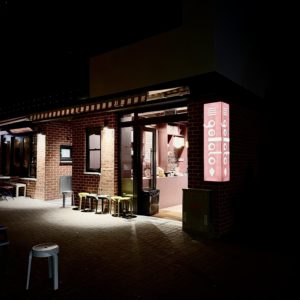
Centre Place Lane in Melbourne

Live in Centre Place Lane – Melbourne

Daily Photo – Centre Place Lane in Melbourne

I left the market and caught a tram into the heart of Melbourne’s CBD. After a short journey I alighted at a stop that read “Bourke Street Mall” and walked a block or two until I found myself outside St Paul’s Cathedral on what was called Swanson Street.

It was then that I suddenly realized I was rather hungry and so went looking for a place to eat – a job that you might expect to be relatively easy in a place widely considered the culinary capital of Australia. But that’s the thing about Melbourne: the city wants you to eat out as soon as you get there, launching an assault on your senses that only the very strongest of wills can resist. This is due in no small part to the fact that the city is home to more than 3,500 restaurants and cafes serving cuisines from over 70 different countries. Take Lygon Street in Carlton as an example; this “Little Italy” precinct boasts approximately 100 restaurants, cafes, and bars alone – and that’s just one street.

Consequently, choosing a place to eat becomes insanely difficult, mainly owing to the fact that there are so many options. Give me a choice between seafood and Italian and I can usually manage, add Indian, Chinese, Greek and a range of Lebanese and Asian influences to the mix and things start to get complicated. But multiply those choices by a thousand and you have a situation that is frankly alarming.

Walk down any central Melbourne street and you’ll find long queues to establishments that are now city institutions. But that doesn’t matter because you can always duck down an alleyway or side street and find a cafe that is impossibly small and roughly the same size as your living room, squeezed between two equally small eateries that nevertheless welcome you like a long lost friend, which is what I did now.

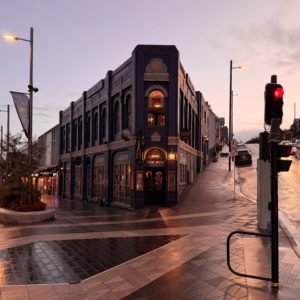
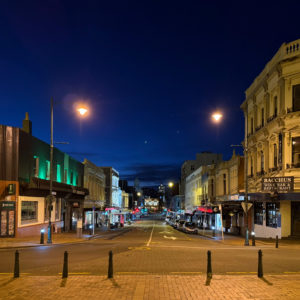
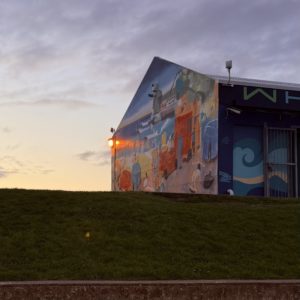
From Swanson Street I turned into Flinders Lane and then again into a small alleyway not more than 2 metres wide and 50 metres long called Centre Place. 

Centre Place was transformed from a neglected service alley into a revitalised laneway by the City of Melbourne and the Victorian State Government in the 1980s, and they’ve done it exceedingly well. The alleyway is tiny, yet it holds upwards of 20 small scale cafes, sushi bars and eateries and is as much a tourist destination as it is a venue, and choosing a place to eat can be quite an overwhelming task. Fortunately the job is made easier by a series of maître d’s eagerly enticing you in.

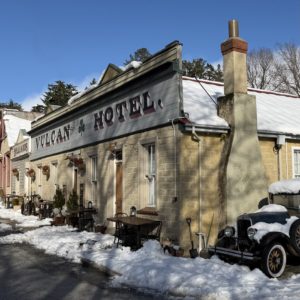
I was on my second lap down the lane when I must have said out loud “ooh Eggs Benedict” as no sooner had the words left my mouth than a pretty young waitress dressed all in black and clothing that left little to the imagination stepped forward and pointed out they also do a New York version featuring a beef brisket. Well, before I knew what was happening I was seated, had ordered and a glass of coke was being placed in front of me by a young man in equally tight clothing and a multitude of piercings that frankly looked like they’d be both painful and annoying. From my vantage point at a table that was placed where a window once sat, I watched the comings and goings of a busy lane in the heart of Melbourne. It really was quite fascinating to watch the people drift by, and for a cafe that couldn’t have been more than 50 square metres, the food was exceedingly good.

Satisfied and full, I paid by waving my phone at a machine on the counter, a neat trick I’d recently been taught by both my wife and daughter a few nights earlier, and stepped out into the throng of foot traffic to consider my next options. 

Vintage Austin Truck in Middlemarch

Daily Photo – Vintage Austin Truck in Middlemarch

Following the need to head out of town for a few hours, it wasn’t long before I found myself leaving the settlement of Outram and rolling along State Highway 87 towards Middlemarch. It’s one of those roads that drifts quietly into the hinterland, leaving town life behind as it follows the Taieri River through wide, empty plains and low, weathered hills, where the mountain ranges do most of the talking and you find yourself driving a little slower without quite knowing why.

As I approached Middlemarch and chugged past the outskirts of town, I came across an unusually large gathering of vehicles near the local rugby club. Every available space along the road and in nearby paddocks had been taken, cars and 4WDs of every description were lined up and separated by hay bales acting as makeshift road markers. Propped up against them were large signs announcing the “Strath Taieri A & P Show 2026”.

For a moment I considered calling in and wandering around, but then thought better of it. There’s only so much farming talk you can bluff your way through before someone asks a question you can’t answer, and I wasn’t in the mood to be found out.

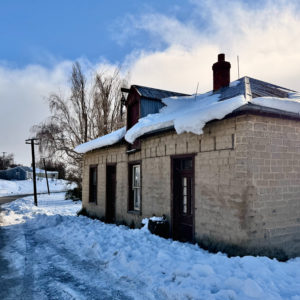
Several streets later I came across the local museum which proudly displays (and quite rightly may I add) New Zealand’s only submarine and I thought about stopping by, but it appeared to be closed. Instead, I settled for a quiet stroll around the local train station where I could wander about without the risk of being drawn into a conversation I wasn’t equipped to have.

The Auckland Weather

Daily Photo – Rain on the Auckland Motorway

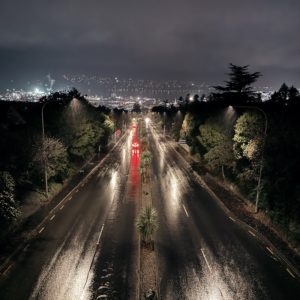
When I arrived in Auckland, I had plenty of plans for the next few days, all carefully assembled in my head with great care somewhere over the Cook Strait, and like most plans made at 30,000 feet, it seemed both admirable and faintly heroic at the same time. Wherever possible, I intended to walk, only using public transport if absolutely necessary. You see so much more of a place when you’re not trapped in a moving vehicle. Sure, you get places quicker, but you also miss a great deal of what’s going on around you. On this trip, I’d vowed to only use it if I had no other option.

That was of course, until I stepped off the plane.

Even before that moment, there had been a few warning signs that the weather wasn’t altogether pleasant. The first was that the terminal, along with most of the city, appeared to be hidden beneath a low blanket of cloud that seemed to have swallowed everything between us and where the airport ought to be. The second clue came from outside the plane, where the ground crew were scurrying about in the sort of gear you only wear when you’re expecting to get thoroughly drenched.

An announcement from the captain then confirmed my suspicions, it was raining!

Not the gentle, polite sort of rain you can wander about in without much concern. This was hard, heavy, determined rain that makes you question whether going outside is a sensible life choice. The kind that falls with such enthusiasm that even ducks might think twice.

In fact, the MetService was warning that the wind and rain could soon become severe enough to cause disruption across the city. I disembarked, found a bus into town, and watched from my seat as the rain pelted down. By the time we arrived somewhere near where I was staying, if anything, the weather had only worsened.

My plans, it seemed, were going to need a fairly substantial rethink.

St Clair Beach at 6am

Daily Photo – The Beach at 6am

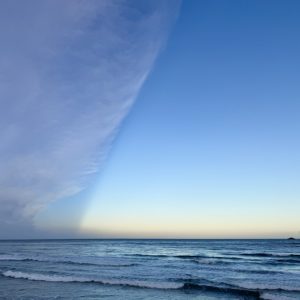
I spent the morning walking the beach that stretches from St Clair to St Kilda Beach, occasionally breaking away from the multitude of footprints to wander through the sand dunes, before clambering back up to rejoin the shoreline.

The morning was fine and clear, the overnight wind had dropped away leaving a rather pleasant morning as the sun rose over the horizon. Unfortunately, it wasn’t meant to stay this way. The forecast was for showers to develop in the morning, turning heavy by the afternoon. By Dunedin’s standards, that seemed to be developing into a fairly regular weather pattern. Thus the reason I decided to go for a shuffle along the beach and trip through the dunes during the best part of the day — which as it turned out, was right around 6am.

River Ambles In Christchurch

Daily Photo – The Avon River in Christchurch

I’d spent some time exploring the Riverside Market, one of those multi-level indoor places filled with restaurants, bars, and all manner of food vendors. Once I was sufficiently fed and watered, I left the hustle and bustle behind and made my way down to the nearby Avon River.

I have to admit, I do like the Avon River. It makes for a lovely stroll through the centre of the city, following its gentle curves as it ambles along. Since I was already on foot, I followed it for a while as it twisted and turned its way through central Christchurch.

Along the way, I discovered that if I were to keep going, I’d eventually end up at Pegasus Bay, where it meets the sea. Or, to be precise, it first slips into the Avon-Heathcote Estuary. From there, it finds its way out through a narrow gap between Sumner and Southshore before finally reaching Pegasus Bay. It’s a slightly roundabout ending, which suits the Avon rather well. It never seems in much of a hurry to get anywhere.

The Butterfly Pond in Palmerston North

Daily Photo – The Butterfly Pond in Palmerston North

Around 1190, Godfrey de Lucy, the Bishop of Winchester, decided that a very large pond would be a rather nice addition to the Hampshire landscape. His plan was a simple one: dam the River Itchen and create a series of cleverly designed locks and canals that would eventually run all the way to the sea. What followed was a massive building project lasting more than two years, resulting in a reservoir covering approximately 200 acres, complete with an embankment stretching 365 metres long and 6 metres high.When it was finished, few could argue that it wasn’t an impressive accomplishment. What’s more, it served a multitude of functions. Firstly, it acted as a “stew pond”, providing a constant supply of fresh fish for the Bishop and the local population. Secondly, the controlled release of water from the weir powered mills further downstream and, finally, the canals helped create a trading boom.

The pond itself was a feat of high medieval technology. It required a massive labour force of local peasants, along with specialised stonemasons, to construct this new stretch of water that appeared in the Hampshire countryside. Once completed, the project proved so successful that it spurred the development of a new town to take advantage of it. What’s more, although now smaller in scale, it has survived to this very day, known as Old Alresford Pond.

In the Middle Ages, ponds were primarily practical. Monasteries designed them to provide a reliable food source, but as the years rolled by, their purpose began to shift. Gradually, the focus moved from necessity to leisure. Ponds were designed to appear natural and became centrepieces for grand estates, reflecting the sky and creating tranquil, picturesque vistas. Before long, they were appearing in public parks too, becoming places for strolling, boating, and quiet admiration. They framed pathways and bridges, sat among carefully planted gardens, and in some cases, entire towns were shaped around them.

All of this talk about ponds is a roundabout way of saying that, in Palmerston North, I came across what is known as the “Butterfly Pond”. Located in the central square, it’s not large or particularly dramatic, but it sits nicely among the lawns and trees. Built in 1909 and officially opened that same year by Mayor James Nash, it was designed in the shape of a butterfly, with the two “wings” forming the pond itself and a bridge across the middle acting as the body. Fountains were added in the 1960s and it has been considered a lovely addition to the Palmerston North central square ever since.

Horseshoe Bay to Bathing Beach to Oban

Daily Photo – Bathing Beach Estuary

I caught a lift with a local who was heading to Lee Bay and the Rakiura Track. When I told him I was wanting to walk from the Mamaku Point Reserve back to Oban, he’d promised to drop me off at the northern end of Horseshoe Bay, where the beach meets the Reserve. It was here that I began my walk back to Oban, a distance of about five kilometres. Horseshoe Bay features a long, flat beach surrounded on three sides by bush, along with a handful of houses overlooking the sand, the bay and beyond to Foveaux Strait. With the tide well out and nobody else around, I decided to walk along the sand. There were footprints heading in both directions. Clearly other people had enjoyed the scenery and the idea of walking close to the tide, although there was no sign of them now.

At the end of the bay I rejoined the road and cut up through the bush before descending on the other side where it opened out onto Butterfield Beach. Once again, I walked on the sand for as long as I could, before rejoining the road for a short stretch and arriving at yet another beach, this one called Bathing Beach. For the most part, the weather had been kind, but by the time I arrived at the beach, the weather was changing. I decided not to hang around and was pleased that the final section of the walk climbed steadily over yet another hill before dropping down again into Oban.

Toward the Hawkdun Range

Daily Photo – Toward the Hawkdun Range

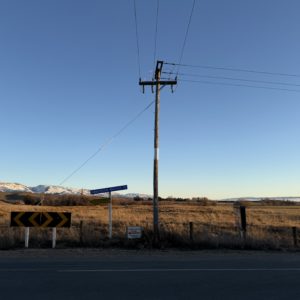
The valley opened out in front of me with wide, open spaces filled with nothing but pale tussock, each clump standing like a small island in a sea of dry grass. They stretched away in every direction, shaped by long Otago summer and a few decades of wind. Ahead, the land rolled upward in soft folds before rising sharply into the distant ridgeline of the Hawkdun Range. Up there the brown hills gave way to streaks of lingering snow, clinging stubbornly to higher gullies and shaded slopes. From where I stood the snow looked almost painted on, white lines cutting across the dark ridges like careless brushstrokes.

Heavy grey clouds hung low over the mountains, threatening rain, while a narrow band of blue held its ground above the ridge. Every now and then sunlight slipped through a gap and wandered briefly across the hills before disappearing once more.

I walked on for a while, partly because it felt good to move and partly because the valley had a an intriguing quality that’s hard to explain. The walk was refreshing, enjoyable as the mountain range loomed larger and larger the closer I got. It was somewhere around this point that a small but undeniable flaw in my plan became apparent. At some point I’d need to walk back!

I turned and looked behind me. The road ran all the way back across the valley floor toward Blackstone Cemetery, where my car was parked beside the gate. I began the slow trudge back to my car, some five kilometres away.

Gravel, Wind, and the Hawkduns

Daily Photo – Gravel, Wind, and the Hawkduns

I’d spent the best part of three days wandering around the Ida Valley in Central Otago, drifting between the small towns of Omakau and Ophir, and up into the hills around Poolburn. By the fourth morning, I found myself at Blackstone Cemetery, wandering among the old graves and a nearby abandoned schoolhouse that appeared to have closed its doors to the world some time ago.

The night before, I had stopped at the local pub in Oturehua for dinner and a quiet pint. What followed was a thoroughly educational evening spent talking to the locals about the weather, the railway that used to run through the valley, sheep, and several finer points of farming that I almost certainly misunderstood. The beers arrived with alarming efficiency, and by the time I eventually stepped outside, my legs had developed a curious independence from the rest of my body.

Now, having showered, eaten, and injected several litres of caffeine into my system, I was beginning to feel almost human. I decided a walk might improve matters further.

Earlier, I had spotted a line on the map called Home Hills Runs Road, which seemed to strike a perfectly straight path toward the distant ridges of the Hawkdun Range. It looked short enough to manage without a total physical collapse, so I left the car by the cemetery gate and set off.

The road stretched ahead through endless tussock. There were no houses and no traffic. There was only the rhythmic crunch of gravel underfoot and a zephyr wind sliding across the floor of the valley.

Rain at Auckland Airport

Daily Photo – Rain at Auckland Airport

I was in Auckland for a period of time, most of which I could spend as I pleased. My plan had been to see the city the way I prefer to see most places, which is on foot. Public transport would only be used where absolutely necessary, preferably when hills became unreasonable or distances began to resemble something more suited to a road trip.

Before landing at Auckland Airport, I had spent much of the flight reading about possible spots I might like to visit and then plotting potential walking routes around the city. By the time the seatbelt signs came on for landing, I had what I believed to be a fairly respectable itinerary.

All of that changed the moment we came in to land, because it was raining.

Not the gentle, polite sort of rain you can wander about in without much concern. This was hard, heavy, determined rain that makes you question whether leaving a building at all is a sensible life choice. The kind that falls with such enthusiasm that even ducks might consider staying indoors.

In fact, the MetService were warning that the expected wind and rain might soon become serious enough to cause real disruption across the city and surrounding areas.

Having disembarked from the plane, I stood watching the rain pelt down across the runways, dissolving the city into a white mist where it ought to have been. Since I hadn’t brought a jacket, it became clear that my carefully planned walking itinerary was about to undergo a fairly substantial rethink.

An Evening Wander Along Marine Parade

Daily Photo – Last Light at Paraparaumu Beach

I was flicking through some of my unpublished images and came across this one from Paraparaumu on the Kapiti Coast. I think it was taken after a few minutes wandering along Marine Parade from Paraparaumu Beach in the direction of Raumati South and Paekākāriki. I’d been watching the sun drop slowly behind Kapiti Island while ambling along the beach and, just as I was about to call it a day, something caught my eye. The toetoe bushes that line the sand dunes, quietly separating the beach from the road and footpath, were swaying in the evening breeze and suddenly seemed worth a second look.

You’ll Be Rewarded With Bluff

Daily Photo – Striling Point Signal Station

If you manage to make it through Invercargill, you’re rewarded with Bluff. A place that doesn’t try to be more than it is, a small town at the southern tip of the South Island. It’s known for its oysters, a signpost, and being the gateway to Stewart Island by ferry. It’s exposed to the elements, has some decent street art, and a tasty food truck you can usually find parked on Gore Street.

This is the place that has watched ships come and go for well over a century through its harbour. It sits staring across the often moody waters of Foveaux Strait, where the wind seems to arrive with purpose and rarely leaves quietly. A place where fishermen keep odd hours and tell even odder stories, and where it has long been a meeting point for sailors, fishermen, and travellers heading further south.

Orepuki – Blink & You’ll Miss It

Daily Photo – Te Waewae Bay

The other day I was involved in a discussion about Southland towns. Gore was mentioned, as was Owaka, Curio Bay, Hedgehope, Mataura and Riverton. The community of Riverton entered the conversation, as did Gemstone Beach, Tuatapere, Nightcaps, Winton, Dipton and Colac Bay. However, there was one place we simply couldn’t remember.

As children, it had been described as the place where, “blink and you’ll miss it.” We knew it had a bowling club, a pub and a few residents, and that was about it. We knew it was something of a ghost town, a shell of what it once was, and that the name began with an “O”. We also knew it was somewhere near Te Waewae Bay. After several minutes of going back and forth, and round and round around in circles, we gave in and referred to Google Maps.

Its name was Orepuki.

Through a Photographer’s Lens: Reinterpreting the Hawkdun Ranges

Daily Photo – Chasing Hawkdun Shadows: Following Grahame Sydney’s Vision

If we’re being completely honest, it’s New Zealand’s famed painter Grahame Sydney we can thank for making the Hawkdun Ranges the icon they’ve become. He’s the one who made them famous, consistently appearing as a timeless backdrop in so many of his most loved paintings, which hang in homes and galleries around the country and across the world. So really, when people like me turn up in the Ida Valley with a camera on a chilly yet cloudless Central Otago day, it’s not exactly groundbreaking. I’m just chasing shadows and light across the hills, taking inspiration from a vision that Sydney already nailed decades ago. Any originality? That’s entirely in the eye of the beholder, or in my case, entirely in the clumsy angle of a tripod.

A Bar, A Fashion Store, A Flood, A Gold Miner & A Horse

Daily Photo – Eichardt’s on Marine Parade in Queenstown.

This is Eichardt’s in Queenstown. It sits on the corner of Marine Parade and is one of those places that seems to reinvent itself about every ten years or so. The current version is part upmarket boutique hotel and part fashion store. But it hasn’t always been like that. Over the years, it has been a private hotel, a public hotel, a public bar, a restaurant, a café, a fashion outlet, and even office space – all quite a long way from the Woolshed it began life as, 160 years ago.

In that time, it’s seen men on it, in it, under it, and thrown out of it. It’s been flooded more times than anyone can remember, appeared on TV, featured in books, and even hosted livestock. One memorable incident from the early mining days involved a prospector fresh from the diggings who rode his horse straight through the front doors and up to the bar. Seeing no reason to dismount when refreshments were only a few metres away, he placed an order with the bar staff – one drink for himself and one for the horse. By all accounts, the horse behaved perfectly, though it had to be escorted back outside before it could sample the beer.

The Catlins from the Papatowai Highway

Daily Photo – The Catlins from the Papatowai Highway

If you venture into the Catlins, you have several options for where to go and which direction to take. Passing Lake Catlins and following the Catlins River through the area around Houipapa, you soon find yourself heading toward small rural communities such as Caberfeidh, MacLennan, then on to Papatowai and eventually Tautuku. Not long after leaving Houipapa the road climbs gently, and before long you reach a point where you can look back down into a valley filled with the most remarkable shades of green. It is the sort of green that makes you realise there are far more varieties of the colour than you ever noticed before.

For tourists travelling through the Catlins, a common stop is the famous Florence Hill Lookout. Personally, I love this view. It feels quieter and more authentic, like stumbling across a secret the guidebooks have not quite caught up with yet.

Waianakarua

Daily Photo – Waianakarua Memorial Hall

A dozen kilometres before I arrived at the famed Moeraki Boulders, I came to the settlement of Waianakarua, home to “The Big Chicken”. A 6.6 metre-high chicken carved out of a macrocarpa tree, a local icon since 1978 and the 2025 New Zealand Tree of the Year. Well, right next door is the Waianakarua Hall. Like so many rural halls, it’s many things. It’s a dance floor, a meeting room, a polling booth, and a memorial. There are honour rolls with the names of sons of farmers and labourers who swapped paddocks for trenches. People who once knew the area intimately and found themselves learning the geography of Gallipoli and France instead. It was all very forgettable, in a memorable sort of way, if you get my meaning.

Waihao and the Waihao River

Daily Photo – Dirt Track near the Waihao River

I pulled over near the Waihao River on a still Canterbury afternoon. I had planned on walking for a bit along the river bank but it wasn’t completely accessible, which was a disappointment. Instead, I explored a dirt road that gave an obscured view of the river as it slipped quietly towards the sea. No dramatic gorge or thunderous rapids announcing its arrival. Just a steady current making its way through paddocks though it has all the time in the world.

The name Waihao comes from te reo Māori and is usually translated as “water of net fishing” or “water with eels”. Hao refers to the shortfin eel, once an important and reliable food source. It is a practical name, the sort that tells you what you need to know – less poetry, more instruction.

For generations the river has been significant to local iwi and hapū, including the Waitaha, Kāti Māmoe and Ngāi Tahu iwi, whose histories are connected through the landscape. Long before fences, bridges and survey lines cut the plains into neat geometry, this was mahinga kai country. Shortfin eels moved through the waters in season. Inanga flickered in the shallows. Freshwater mussels lay buried in the mud. The river was a pantry and pathway, sustaining communities while also guiding them.

Oral histories connect the area to the ancestral canoe Uruao and to explorers such as Rākaihautū and Rokohouia, who journeyed through Te Waipounamu naming lakes and rivers as they travelled. Stories of Paewhenua, a sacred adze, and of taniwha guiding travellers along the river add layers to the landscape, reminding us that waterways were understood not as scenery or resource alone, but as part of an identity.

Willowbank and the Iconic Yellow Barn

Daily Photo – The Iconic Yellow Barn

I came to a place called Willowbank, where I had the option to turn off State Highway 1 and head inland some six kilometres to Waimate. I was encouraged to do so by a large yellow barn by the side of the road which told me to “hop in for a visit,” accompanied by the silhouette of a wallaby. The irony here, of course, is that wallabies are considered an invasive pest. Millions are spent trying to control their numbers while they happily nibble their way through fence lines and pasture in the surrounding countryside. We have a man named Michael Studholme to thank for introducing them to New Zealand; a local runholder during the 1870s, he decided it would be a good idea to release them on his property as a novelty – a decision everyone has regretted ever since.

Yet, here they are, frozen mid-hop on a farm shed, inviting you in. It’s a very New Zealand contradiction: apologising for something while simultaneously putting it on the welcome sign. It’s a wee bit like Rotorua saying, “Welcome to the Sulphur City!” – we know it smells like rotten eggs, but please, come stay in our luxury hotels – or painting an aeroplane black to advertise the national rugby team, then flying it at night!

Anyway, I thought about heading into Waimate for a poke around to see if I could spot a wallaby, but the thought quickly passed, and I headed for the Waitaki River and Otago instead.

Blackett’s Lighthouse in Timaru

Daily Photo – Blackett’s Lighthouse in Timaru

The last time I stopped in Timaru I was a little hard on the dear old place. It had been a long drive and I had been stuck in a long convoy of traffic, which left me in a grumpy mood. The only park I could find was in front of a building that had seen better days. There were few coffee options in the area and the only one I found was terrible.

On this occasion I decided to give it another try and opted for a walk to Blackett’s Lighthouse, which then led down to the beach and shoreline of Caroline Bay. It was one of those warm summer days when the sky was clear, the wind had dropped and the tide drifted lazily in and out under the sparkling sun. If anything, it was altogether pleasant.

Temuka’s Most Famous Resident

Daily Photo – The Royal Hotel in Temuka

So on to Temuka, whose most famous resident was Richard William Pearse. Born in 1877 at Waitohi Flat, just eight minutes from the South Canterbury township, what makes him so remarkable is that nine months before Wilbur and Orville Wright achieved the world’s first sustained and controlled flight at Kitty Hawk on December 17, 1903, Pearse made his own attempt, albeit with a little less style and grace. Where the Wright brothers stayed airborne for a controlled 12 seconds, Pearse’s effort amounted to three seconds of uncontrolled jerking and bumping before crashing into a hedge. Nevertheless, it was an extraordinary achievement for a man working in near isolation, removed from society, tinkering away in a farm shed with little more than bamboo, tricycle wheels, wire, canvas, and a hand designed and built two cylinder combustion engine.

The Ellesmere Brass Band Hall

Daily Photo – The Ellesmere Brass Band Hall

According to the internet, Leeston is a charming rural town in Canterbury, offering a quiet escape with quality schools, plenty of local dining and numerous fishing spots. It has an oversized longfin tuna sculpture and even a brass band that’s one of the oldest in the South Island. I know this because I looked it up.

What it doesn’t tell you is that some idiot, who has forgotten how to drive, will cut you off as they pull onto the high street, forcing you to stop suddenly at a pedestrian crossing while two gentlemen make their way across the road at the sort of pace that suggests this is the only thing they’ve got to do all day.

Farm Field at Little River

Daily Photo – Farm Field at Little River

I rolled into Little River around mid-morning, it was a Monday, which normally means a place like this is easing itself slowly back to life. A few empty parking spaces along the main street, someone sweeping a doorstep, and the faint sense of a weekend just finished. Today things were a little different in the town of Little River. The main street was jammed with mud splattered utes with brand names like Toyota and Kia. What’s more they were all parked at odd angles – suggesting they had been abandoned mid thought, farm dogs barking at everything and nothing, while their owners stood in loose groups along the footpath dressed in shorts and Swanndris, pointing, laughing, and slapping hands with the sort of enthusiasm usually reserved for a Saturday night. With caution, I drove through the gathering and casually gave the customary New Zealand rural wave, lifting a single finger from the steering wheel without fully letting go, offering just enough acknowledgement to be polite paired with a small knowing smile that said I understood the rules even if no one had ever explained them. Then, suddenly that was it. I was leaving the town of Little River, the noise fading behind me, mud, dogs, laughter, and the feeling that everyone else was in on something, and I would have to spend the rest of my life not knowing what it was.

The Brainchild of William Coop

Daily Photo – Abandoned Home in Cooptown

Cooptown is a place that was meant to be something, but never really became anything. A town with a name, a school, and a dairy factory, it had desire and ambition, sitting quietly in the valley waiting for a future that never arrived.

It was the brainchild of William Coop, a local settler who arrived in the area in the late 1800s on the back of the sawmilling industry that was booming at the time. He subdivided the land, named it “Cooptown” (literally meaning Coop’s town), and hoped an independent township would blossom. Unfortunately for William Coop, it never became much more than an offshoot of the nearby town of Little River, which is just five minutes down the road.

Barry’s Bay on Banks Peninsula

Daily Photo – Barry’s Bay on Banks Peninsula

On a promise, I stopped at Barry’s Bay to purchase a specific selection of cheeses from the local shop. Not being a cheese eater, I felt quite out of my depth and had no real idea what I was looking for. Knowing it was inevitable that I would need help, I approached the counter, where a very helpful lady examined my list and, within seconds, a small pile of cheeses had formed in front of me. I made my purchases, bought a coffee, and stood looking out over the bay as the sky closed in.

Fenceline at Robinsons Bay

Daily Photo – Fenceline at Robinsons Bay

I spent the next few days strolling the streets of Akaroa, rummaging through shop shelves looking for nothing in particular, visiting museums, eating at cafés, walking the surrounding hills, and exploring bays and coves, with the occasional fence line blocking my path. There’s always a fence line blocking the way. That’s the thing about walking in rural New Zealand, if you wander for long enough, eventually you’ll come across a fence that needs to be negotiated. On this occasion it was entangled with weeds and driftwood. It seemed to come from nowhere and disappear into the water. Just what its purpose was, I couldn’t imagine. It seemed to be in such an odd place. But then again, when it comes to the intricacies of rural life, my own farming knowledge begins and ends with knowing which side of the fence I’m supposed to be standing on. And sometimes not even then.

The Wreck of the Cutter The Brothers

Daily Photo – Akaroa Lighhouse

When the small cutter The Brothers entered Akaroa Harbour on 10 November 1842, it was the end of a long and important trip. Captained by a man named James Bruce, the ship had been at sea for eight weeks, navigating uncharted, rocky coastlines and battling subantarctic conditions beyond Stewart Island and Foveaux Strait – mapping harbours, landmarks and whaling stations around the South Island. As the trip came to an end, the final leg of the journey was scheduled to sail to Wellington, after calling in at Akaroa Harbour. As had happened on so many occasions, the cutter was due to drop anchor so some of the eleven passengers could disembark and supplies could be collected before the final run to Wellington began. With charts, maps, field books, instruments and survey records on board, the trip had been a success and had gathered a wide range of information that was going to be used to map future settlements for the New Zealand Company, who were promoting colonisation at the time.

Entering Akaroa Harbour, the vessel was suddenly hit by a squall blowing off the hills, capsizing the ship, turning her keel up and, in the process, destroying all the records, maps and plans that had been meticulously collected on the two month voyage. Upon sinking, most of the people on board were able to scramble into the small lifeboat, but a woman and two children, caught below deck when the cutter rolled, were not so fortunate.

Akaroa in Afternoon Sunshine

Daily Photo – Akaroa in Afternoon Sunshine

By the time I’d made my way down through the hills of Banks Peninsula back to Akaroa township, the weather was starting to clear. Eventually, the misty, heavy cloud cover gave way to bright sunshine. The bays sparkled as the entire area seemingly came to life in the warm afternoon light.

I strolled through bays with names like Children’s, French, and finally, Glen. Filled with boats and wharfs, the harbor was a hive of quiet activity; tourist cruises came and went, and sightseeing tours disappeared around the point at the far end of Glen Bay, the gateway to the wider harbour and, eventually, the Pacific Ocean. I strolled and strolled, my pace matching the slow-natured feeling of the afternoon. Near the Akaroa Lighthouse, I found a weathered wooden bench overlooking the calm, blue water. I watched the town’s colonial charm sharpen under the clarity of the light. The white timber cottages, with their bright trim, looked like something out of a storybook set against the dramatic, emerald-green backdrop of the surrounding hills.

Wrights Lookout on Banks Peninsula

Daily Photo – Wrights Lookout on Banks Peninsula

The next morning I started the day by heading into the hills high above Akaroa on Banks Peninsula. On the map, I spotted a place called ‘Wrights Lookout.’ It’s one of those spots where the road feels like it’s deciding whether to keep going or give up. The harbour appears suddenly, far below, as if you’ve stumbled into an aerial photograph.

My guess is that it’s named after a family with the surname ‘Wright,’ who were likely early farmers or landowners in the area. On Banks Peninsula, this was the standard way places were named; features often took the surname of whoever farmed, owned, or lived on the surrounding run. In the early years of the settlement, I’m sure the family spent many an hour leaning on a fence post, watching the sheep, wind, and weather, doing what farmers do, probably never thinking they were creating a landmark.

Jetty at Akaroa

Daily Photo – Jetty at Akaroa

The pace of the journey dropped to a crawl. After the slow grind over the hills, I’d imagined myself arriving in the early evening to bright sunshine. I pictured it settling into a long, warm evening where the last of the tranquil summer light would linger before fading as night crept in. My plan was simple: sit in a warm garden bar, eat well, enjoy a few beers, and stumble to bed – tired but content.

Instead, what sunshine there was, had disappeared for the day, replaced by a brisk wind and heavy overhead clouds that threatened rain. It had been a long day, and I arrived in Akaroa feeling slightly disappointed with the weather. I dumped my bags in my hotel room, ate in a nearby restaurant, and retired to bed, still looking forward to exploring the town in what would surely be a sunny summer’s day.