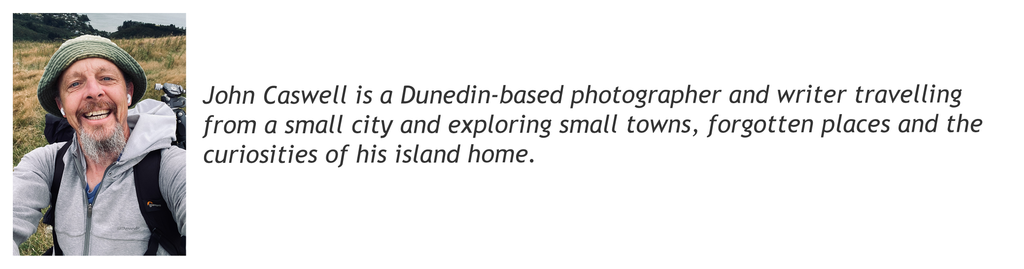
An Arvo in Takamatua Bay (formerly German Bay)

Daily Photo – A Summer arvo in Takamatua Bay

Every so often it’s possible to come across a strange, slightly unexpected bit of historical awkwardness, and Takamatua Bay is one of them. Originally known as German Bay, it was a by-product of early colonial ambition and something we can thank the French for. 

Back in the 1840s, the French became enthusiastic about colonising the South Island, and their sights were fixed on Banks Peninsula and a port called Akaroa. A French company had grand plans to establish a proper French settlement and, to make it viable, they needed people – anyone willing to risk sailing to the far side of the world and starting again. At the time, Germany was a politically unstable patchwork of small states where people were facing economic hardship. So, when the chance came to emigrate to Banks Peninsula, a few German families happily signed on. 

When they reached Akaroa Harbour, land was allocated around the bays, and the German colonists settled in small numbers, farming, fishing, and setting about carving out a living on steep, bush-covered land that looked out over what became known as German Bay. In those dusty, pre-war years, the locals were perfectly content with the name, a nod to the handful of Teutonic families who had settled there and were, by all accounts, quite well behaved. It was a sensible, if unimaginative name that served everyone well until 1914, when the world decided to go collectively mad.

Suddenly, having a “German” anything in the neighbourhood was about as socially desirable as a case of the mumps. By 1916, gripped by a sudden (and conveniently timed) burst of patriotic fervour, the authorities decided that the name had to go. In a fit of enthusiasm, they quietly dusted off the original name, Takamatua Bay. It was a classic piece of historical rebranding while Europe’s map was being redrawn in blood and mud on the battlefields of the First World War.

Curious for more? Explore more from a Small City.

Click here

The Akaroa Britomart Monument

Daily Photo – The Akaroa Britomart Monument

Akaroa was quite lovely in the morning sunshine. Beyond the town, out in the bay, sailboats drifted casually on a slow-moving tide, and in the still, clear air the rolling green hills of Banks Peninsula rose up, still partly wrapped in clouds that seemed reluctant to lift. I walked into town and carried on through the bays to the Akaroa Lighthouse, then followed a path that traced the contours of the shoreline for another kilometre until I came to a sign that read “Britomart Monument”. The track headed up into the bush, and so did I, beneath a thick canopy of trees. I’d read somewhere that at the end of the track, out toward Green’s Point, there’s a monument marking one of those small but pivotal moments in our history: the raising of the British flag to signal the arrival of HMS Britomart in 1840. It doesn’t sound like much at first, a ship arriving, a flag going up. But that simple act carried weight. It was a sign to any approaching French ships and hopeful colonists that the South Island, at least in the eyes of the Crown, was already spoken for.

Curious for more? Explore more from a Small City.

Click here

Farm Field at Little River

Daily Photo – Farm Field at Little River

I rolled into Little River around mid-morning, it was a Monday, which normally means a place like this is easing itself slowly back to life. A few empty parking spaces along the main street, someone sweeping a doorstep, and the faint sense of a weekend just finished. Today things were a little different in the town of Little River. The main street was jammed with mud splattered utes with brand names like Toyota and Kia. What’s more they were all parked at odd angles – suggesting they had been abandoned mid thought, farm dogs barking at everything and nothing, while their owners stood in loose groups along the footpath dressed in shorts and Swanndris, pointing, laughing, and slapping hands with the sort of enthusiasm usually reserved for a Saturday night. With caution, I drove through the gathering and casually gave the customary New Zealand rural wave, lifting a single finger from the steering wheel without fully letting go, offering just enough acknowledgement to be polite paired with a small knowing smile that said I understood the rules even if no one had ever explained them. Then, suddenly that was it. I was leaving the town of Little River, the noise fading behind me, mud, dogs, laughter, and the feeling that everyone else was in on something, and I would have to spend the rest of my life not knowing what it was.

The Brainchild of William Coop

Daily Photo – Abandoned Home in Cooptown

Cooptown is a place that was meant to be something, but never really became anything. A town with a name, a school, and a dairy factory, it had desire and ambition, sitting quietly in the valley waiting for a future that never arrived.

It was the brainchild of William Coop, a local settler who arrived in the area in the late 1800s on the back of the sawmilling industry that was booming at the time. He subdivided the land, named it “Cooptown” (literally meaning Coop’s town), and hoped an independent township would blossom. Unfortunately for William Coop, it never became much more than an offshoot of the nearby town of Little River, which is just five minutes down the road.

Barry’s Bay on Banks Peninsula

Daily Photo – Barry’s Bay on Banks Peninsula

On a promise, I stopped at Barry’s Bay to purchase a specific selection of cheeses from the local shop. Not being a cheese eater, I felt quite out of my depth and had no real idea what I was looking for. Knowing it was inevitable that I would need help, I approached the counter, where a very helpful lady examined my list and, within seconds, a small pile of cheeses had formed in front of me. I made my purchases, bought a coffee, and stood looking out over the bay as the sky closed in.

Fenceline at Robinsons Bay

Daily Photo – Fenceline at Robinsons Bay

I spent the next few days strolling the streets of Akaroa, rummaging through shop shelves looking for nothing in particular, visiting museums, eating at cafés, walking the surrounding hills, and exploring bays and coves, with the occasional fence line blocking my path. There’s always a fence line blocking the way. That’s the thing about walking in rural New Zealand, if you wander for long enough, eventually you’ll come across a fence that needs to be negotiated. On this occasion it was entangled with weeds and driftwood. It seemed to come from nowhere and disappear into the water. Just what its purpose was, I couldn’t imagine. It seemed to be in such an odd place. But then again, when it comes to the intricacies of rural life, my own farming knowledge begins and ends with knowing which side of the fence I’m supposed to be standing on. And sometimes not even then.

Wrights Lookout on Banks Peninsula

Daily Photo – Wrights Lookout on Banks Peninsula

The next morning I started the day by heading into the hills high above Akaroa on Banks Peninsula. On the map, I spotted a place called ‘Wrights Lookout.’ It’s one of those spots where the road feels like it’s deciding whether to keep going or give up. The harbour appears suddenly, far below, as if you’ve stumbled into an aerial photograph.

My guess is that it’s named after a family with the surname ‘Wright,’ who were likely early farmers or landowners in the area. On Banks Peninsula, this was the standard way places were named; features often took the surname of whoever farmed, owned, or lived on the surrounding run. In the early years of the settlement, I’m sure the family spent many an hour leaning on a fence post, watching the sheep, wind, and weather, doing what farmers do, probably never thinking they were creating a landmark.

Jetty at Akaroa

Daily Photo – Jetty at Akaroa

The pace of the journey dropped to a crawl. After the slow grind over the hills, I’d imagined myself arriving in the early evening to bright sunshine. I pictured it settling into a long, warm evening where the last of the tranquil summer light would linger before fading as night crept in. My plan was simple: sit in a warm garden bar, eat well, enjoy a few beers, and stumble to bed – tired but content.

Instead, what sunshine there was, had disappeared for the day, replaced by a brisk wind and heavy overhead clouds that threatened rain. It had been a long day, and I arrived in Akaroa feeling slightly disappointed with the weather. I dumped my bags in my hotel room, ate in a nearby restaurant, and retired to bed, still looking forward to exploring the town in what would surely be a sunny summer’s day.

Hilltop on Banks Peninsula

Daily Photo – Hilltop on Banks Peninsula

I headed northeast along State Highway 75 through the small settlements of Little River, Cooptown, and Puaha. I was aiming for Akaroa, tucked in a small bay on the eastern side of Banks Peninsula. The road wound its way, almost painfully slowly, over the rugged hills that separate the hundreds of tiny bays on the peninsula from the flat plains of the wider Canterbury region.

I drove and drove, the road twisting upward as the pace of the journey dropped to a crawl. At one point, the traffic was moving so slowly, thanks to an annoyance of campervans, that I pulled over to take in the views, which were quite magnificent. Before cresting the hill, the landscape undulates with rugged farmland that stretches over the peaks before giving way to hillsides that tumble through green pastures to the water’s edge. Then, suddenly, you’re faced with a quiet, dreamy landscape filled with bays and inlets that seem oblivious to the outside world, operating on a different timescale.

Annetta Maccioni & the Death of Frederick Butler

Daily Photo – Lake Forsyth on Banks Peninsula

If you stand on the shore of Lake Forsyth today and look up into the hills of Banks Peninsula, you’ll see the green slopes of Kinloch. Looking at those hills now, it’s hard to imagine that in the 1880s, this was thirteen thousand acres of curated Scottish hope.

Hugh Buchanan, a Scotsman with a memory for the Highlands, wasn’t just farming this area, he was recreating a lost home. But Kinloch didn’t end up in the history books for its merinos or its sixty-five miles of wire fencing, it became the site of a tragedy of historic proportions.

Annetta Maccioni was only nineteen, a daughter of Italian immigrants working as a housemaid at the Buchanan homestead. In those days, a job at Kinloch was a prestigious position which really meant heavy expectations and very little room for error. On April 27th, while dusting behind a heavy dressing-table mirror in the master bedroom, Annetta found a six-chambered revolver that belonged to Hugh Buchanan.  As Annetta handled the gun, Buchanan’s six-year-old son, Frederick, was playing nearby. In the space of a single click and a flash, everything changed. The gun fired and young Frederick was gone instantly.

The aftermath was a mess in many different ways. The local pub was turned into a makeshift courtroom, which feels strangely New Zealand, men drinking at the bar one minute and deciding a woman’s fate the next. While the jury ultimately saw it for what it was, a devastating accident returning a verdict of excusable homicide, the court of public opinion wasn’t so kind.

Frederick’s parents didn’t just grieve; they turned their pain into a weapon. They painted Annetta as a “darker” character, an outsider with a vindictive streak. The whispers in the surrounding settlements near Lake Forsyth were more like shouts, gossip that traveled faster than official news. Despite no evidence, she became a social pariah.

Left with little option, Annetta eventually vanished from the area, never seen near Lake Forsyth again.